Most documents can now be signed without touching a pen. Then every so often, a lender, court, government office or other institution asks for a signed paper copy instead.
That can be confusing, especially when the same document would be accepted electronically somewhere else.
So what exactly are they asking for, and why does ink still matter in some cases? Below are 5 situations where a wet signature can still come up, followed by a clear comparison with electronic signatures and what to do when someone asks for one.
Everyday contracts such as an NDA are often signed electronically. A wet signature is a signature written by hand, in ink, on paper. These five situations are where you may still need one.
Wills are the clearest example. The ESIGN Act, the US federal law on electronic signatures, does not apply to them (15 U.S.C. 7003).
The same goes for codicils, which change an existing will, and testamentary trusts, which a will sets up. The Uniform Electronic Transactions Act, a model law for US states to adopt, leaves all three out too (section 3).
That leaves the signing rules to each state’s wills law. In Florida, for example, a will needs at least two witnesses (Florida Statutes, section 732.502). The witnesses sign in front of the person making the will and in front of each other.
Florida also has rules for electronic wills (section 732.522). In France, a handwritten will must be written, dated and signed entirely by hand (Code civil, Article 970). Rules differ by state and country, so ask an estate lawyer before anyone signs a will on a screen.
Skip the notary, and some documents do not count at all. A power of attorney, which lets someone else act on your behalf, is one example.
In Florida, a power of attorney must be signed by the person giving it and by two witnesses. The person giving it must also confirm the signature before a notary or a similar official (Florida Statutes, section 709.2105).
Notarization does not always mean meeting in person. Florida also allows online notarization over a video call (section 117.209). Wills and some powers of attorney have extra conditions when the witnesses join by video (section 117.285).
Before you book, ask the office that will receive the document whether it accepts an online notarization.
Do courts still expect papers signed in ink?
Court orders, court notices and official court documents are exceptions under the ESIGN Act too (15 U.S.C. 7003). That includes briefs and pleadings, such as the complaint that starts a lawsuit.
Being on that list does not mean every court wants ink. US federal courts show this. In civil cases there, people with a lawyer must file electronically unless the court or a local rule allows paper.
A filing sent through a person’s own e-filing account, with their approval, counts as their signature (Federal Rules of Civil Procedure, Rule 5). Their name must also appear on the signature block.
These rules cover federal courts only, and a state court may work differently. Your lawyer or the court clerk can tell you what a filing needs.
Sometimes the request comes from the other party’s own rules, not from a law about the document. The ESIGN Act does not require a bank or a lender to accept electronic signatures (15 U.S.C. 7001).
So a lender can still ask for a loan agreement signed in ink and posted back. Government offices can set their own rules too.
US Citizenship and Immigration Services, for example, needs a handwritten signature on forms filed on paper. A typed name or a pasted image of a signature does not count. Neither does a signature made in an e-signature tool outside its own online account.
Before you print anything, read the instructions that come with the form.
In the EU, only a qualified electronic signature has the same legal effect as a handwritten one (Regulation (EU) No 910/2014, Article 25). It needs a qualified certificate and a special signing device.
Each EU country’s own laws decide when a document needs that level. In Germany, where a document must be signed by hand, the electronic version needs a qualified signature (German Civil Code, section 126a).
For some documents, even a qualified signature is not enough. In Germany, a notice ending an employment contract must be signed by hand (section 623). In France, private agreements on family law and inheritance cannot be made electronically, except some divorce agreements countersigned by lawyers (Code civil, Article 1175).
When a document needs that effect and you have no qualified signature, the other party may ask for ink. A lawyer in that country can confirm which form the document needs.
A wet signature and an electronic signature both show that someone agreed to a document. They differ in how they are made, checked, sent and kept.
|
|
Wet signature |
Electronic signature |
|---|---|---|
|
How it is made |
Pen on paper |
Typed, drawn or clicked on a screen |
|
How you prove who signed |
Handwriting, plus witnesses or a notary when used |
A record such as the time, IP address or a one-time code |
|
How it travels |
By post, courier or in person |
Through a secure link |
|
Where the original is kept |
In a paper file |
As a digital file with its audit trail |
|
When it is used |
When a law, a court or the other party asks for ink |
Everyday contracts, unless an exception applies |
Check each document on its own. An NDA with a supplier and a power of attorney can follow very different rules.
Once someone asks for a document to be wet signed, the details start to matter. The request usually comes from whoever will hold the file: a notary, a court clerk, a lender or a government office. These three questions come up every time.
You signed the page in ink, and now it has to go by email. A scan or a phone photo of it is a copy of that signature. The ink itself stays on the paper in your hand.
Whether the copy is enough is up to the receiving party or the rule that applies to the document.
US Citizenship and Immigration Services is a clear example. It accepts a copy of a paper form that has been photocopied, scanned or faxed. Unless a form says otherwise, that copy does not need an original wet ink signature.
Send a scan as a PDF rather than a phone photo where you can. A flat scan keeps every line readable, and a photo can blur the signature itself.
Keep the signed paper safe either way. An office that wants the original will ask for it later.
People often ask whether initials count. It depends on what the signer meant by them.
US commercial law is broad on this point. Under the Uniform Commercial Code, a signature covers any symbol adopted with the intention of accepting a writing (section 1-201(b)(37)).
So a mark can be a signature when the signer means it as one. Immigration forms show the same idea.
A valid signature for the agency above is any handwritten mark. It does not have to be legible, in English or in cursive. An X or another symbol is allowed.
Initials in the margin of a page usually mean something else. They record that the page was read, not that the contract was agreed. Ask which one a form wants before you sign.
A printer is the usual blocker once ink is requested. Ask the sender to post you a paper copy with a return envelope.
A print shop or a public library can also print and scan in one visit. Take the return instructions with you, so you post the right pages back.
The pen has to meet the paper you are sending back. So do not print a scan of an already signed page and send that.
Write the date in the format the form uses. Sign with the same name that appears in the document, because a different one slows the file down.
Scan the signed pages before you post them, so you keep a record of what you sent. Post the original with a tracked service and keep the receipt.
Sending something you cannot replace? Ask how long they need to hold it first.
Printing, signing and posting pages takes time, and the other side may accept a scan anyway. So start by asking, in writing, whether an electronic signature or a scanned copy is accepted.
Name the exact document, such as the loan agreement or the power of attorney. Keep the reply with the file, so the question does not come up again.
If ink is required, sign in pen on every line marked for you and date it where asked. Follow the sending instructions, and post the original if they ask for it. Keep a copy for your records.
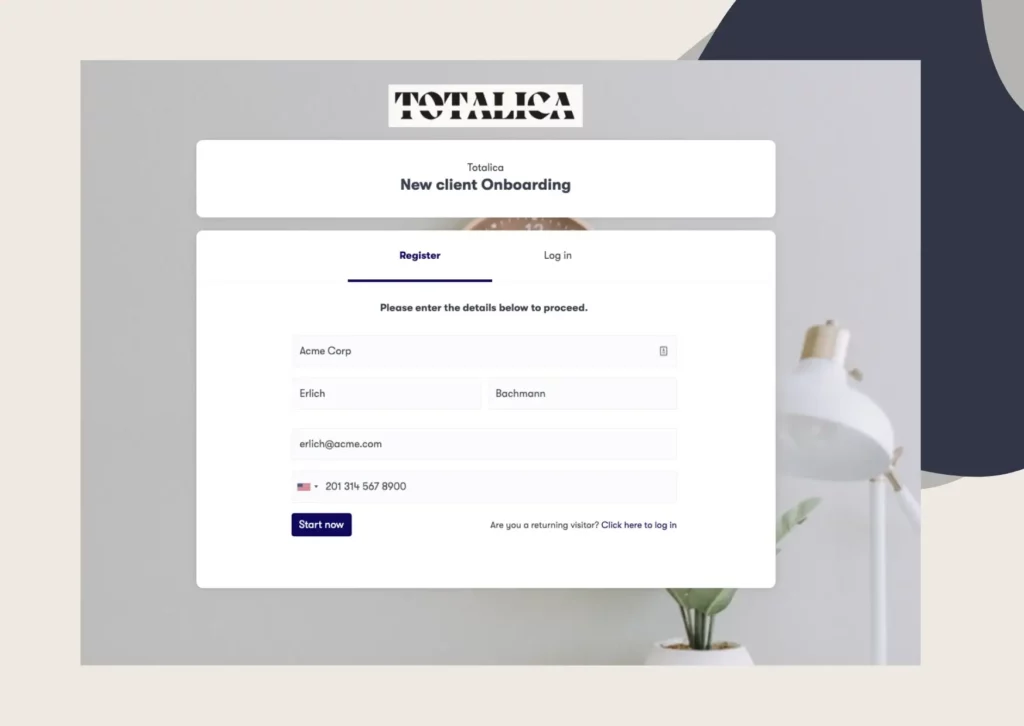
Your own client agreements are different. For a service agreement or an engagement letter, you can offer an e-signature from the start. Clustdoc collects legally binding e-signatures under eIDAS as part of client onboarding.
Our advanced electronic signature adds two checks. The signer draws their signature with a mouse or finger and enters a one-time code sent by SMS or email. Each signature comes with a time-stamped audit trail that includes the signer’s IP address.
Still waiting on signed pages in the post? Book a demo call to see how Clustdoc handles signing during client onboarding.
Yes. You can scan the signed page and email it, and many offices accept that copy.
Check the instructions first, because some want the paper original by post. Keep the signed original somewhere safe until they confirm they are done with it.
On the paper itself, you can often see or feel where the pen pressed into the page. A printed copy of a signature sits flat, like the rest of the printed text.
A scan hides that difference, because the signature becomes part of the image. If you receive a copy and the original matters, ask for the paper page before you rely on it.
No. They are made and checked in different ways. Still, under the ESIGN Act and eIDAS, a signature cannot be denied legal effect just because it is electronic.
Some documents sit outside that rule, such as wills and official court papers. Check which signature the other side will accept before anyone signs.
A document is wet signed when someone signs it by hand in ink. People use the phrase when they want an ink signature rather than a typed or drawn electronic one.
A signature drawn with a finger or stylus on a screen is not wet signed, even if it looks handwritten. If a request says a document must be wet signed, check whether they also need the paper original.
Still stitching emails, files, and approvals together?
Clustdoc gives teams one place to run client-facing work, boost customer engagement and increase compliance.

Claire writes about customer onboarding, digital processes, and the day-to-day challenges faced by operations teams. At Clustdoc, she focuses on practical insights: how organizations collect information, guide customers through complex steps, and improve service delivery with automation.