The first call went well, and the client wants to start this week. Then the conflict search turns up a name nobody expected, and the engagement letter is still unsigned.
Law firm client onboarding often stalls exactly here. Each of these gaps is small on its own. Together, they decide whether the matter opens this week or next month.
The client notices these delays too. For them, those first few days are the first real look at how your firm works, well before any legal work starts.
The order matters. Nobody should ask for a retainer or client files before the firm knows it can take the matter.
Has the firm ever represented the other side, or a company linked to it? A law firm conflict check answers that before anyone promises to take the case.
It checks the client, any related companies and every opposing party against the firm’s current and former clients. Collect those names during law firm client intake, so the search can start early.
Acting against a current client requires that client’s informed consent, confirmed in writing (ABA Model Rule 1.7). Rule 1.9 covers duties to former clients, and Rule 1.10 can extend one lawyer’s conflict to the whole firm. Most states model their own ethics rules on these, so check your state’s version.
Keep a record of every client conflict check: who ran it, what it found and who cleared it. Clustdoc can collect those names on the intake form, and your team runs the search in the firm’s own records.
The conflict check used the names the client gave you. Now make sure those names belong to real people and real companies. For an individual, ask for a photo ID, such as a passport or a driver’s license.
For a company, also confirm who is allowed to give the firm instructions. Keep proof on file, like a board resolution naming that person, next to the certificate of incorporation.
In the UK, the Money Laundering Regulations 2017 apply to legal work such as property sales or setting up companies. For that work, the firm must identify and verify the client. It must also take reasonable steps to verify who owns a company client.
Our identity verification can be a required step that checks government-issued IDs and selfies. Until the ID is approved, the client cannot move on to signing or sending more files.
A lawyer and a client can leave the same call with different ideas about the fee. Once the client is confirmed, send the engagement letter.
A law firm engagement letter sets out the scope of the work and how fees and expenses are charged. It also names who will work on the matter and how the firm and client will keep in touch.
The client must be told the scope and how fees are worked out, preferably in writing (ABA Model Rule 1.5). That can happen before the work starts or within a reasonable time after. Signing at the start gives both sides a record of what was agreed.
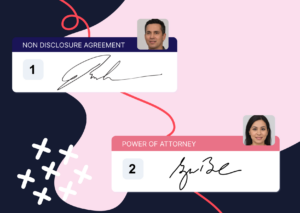
Clients sign with our legally binding e-signatures in the same place they upload their files. Details the client already entered can prefill the letter. When several people need to sign, they can sign in order or at the same time.
Fee terms only help if the client understands them. Before work starts, walk the client through how they will be charged: an hourly rate, a flat fee or a contingent fee. Explain which costs count as expenses, such as court filing fees or courier fees.
If the firm wants a retainer, meaning an advance payment toward future fees, agree on the amount and due date. Advance fees go into a client trust account and are withdrawn only as they are earned (ABA Model Rule 1.15). Check your state’s trust account rules before you accept any money.
England and Wales have their own version. Client money goes promptly into a separate client account (SRA Accounts Rules 2.3 and 4.1). The firm sends a bill before it takes its own costs from that money (rule 4.3).
If work waits for that payment, say so in the engagement letter.
A client emails their bank statements to a paralegal who is away that week. Nobody else on the matter sees them. Another client sends a tax return to the wrong email address.
Decide how the client will send files and messages before the first request goes out. One secure place for uploads and messages keeps everything with the matter.
Lawyers must make reasonable efforts to prevent unauthorized access to client information (ABA Model Rule 1.6). Start by deciding who at the firm can open the file, such as the responsible lawyer and their paralegal. Ask the client which email address and phone number to use, especially if others can read their work email.
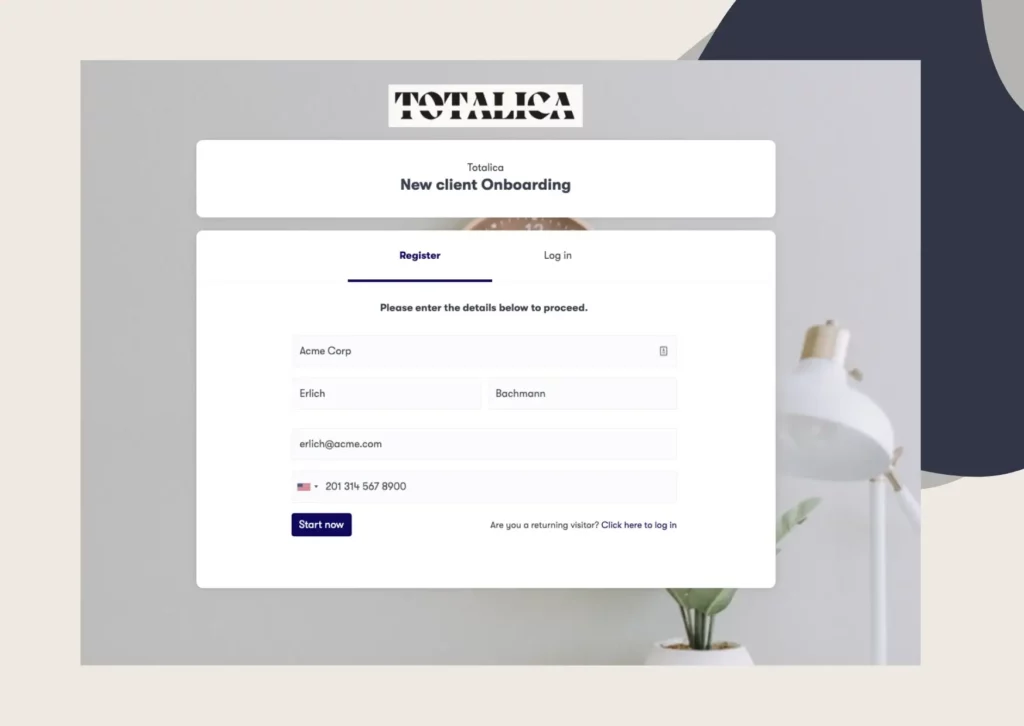
In our branded client portal, clients upload files and complete their steps from any device. Role-based access controls set what each team member can view, edit or approve.
Ask only for the files this type of matter needs, and give each request a due date. The list looks very different from one practice area to the next:
With our legal client intake software, the firm can build a checklist for each practice area. Clients then see only what their matter requires.
Your team can accept or reject each file, which catches a blurry passport scan before anyone relies on it. Automated email and SMS reminders follow up on anything still missing.
A first meeting that ends without dates can leave each side waiting for the other. Use the kickoff to agree on a plan.
Go over the scope in the engagement letter first. The timeline comes next, along with any fixed dates, such as a court hearing or a filing deadline.
The client should leave knowing who their day-to-day contact is. Agree on what happens next on both sides: what the client still has to send, and what the firm will do first. Put a date on every client task, for example signing a medical records release.
After the meeting, send a short written summary of those points. It can double as a new client welcome letter, giving the client one page to check when questions come up.
Most searches come back clean. When one does not, stop the other onboarding steps and decide what the firm is allowed to do.
Decline the matter. Some conflicts cannot be waived at all (ABA Model Rule 1.7). Write to the person to say the firm will not act, so they can look elsewhere quickly.
Ask for consent. Where the rule allows it, each affected client must give informed consent, confirmed in writing. Check your own state’s version, because the conditions are not the same everywhere.
Refer the person on. If the firm cannot act, pass the name to another firm that can. Note the referral. Otherwise someone at your firm may open the matter later.
In England and Wales, the SRA Code allows acting despite a conflict in two narrow cases only. Every client must then give informed consent in writing (paragraph 6.2).
Write down the decision, the date and who made it. Then agree what happens to any files the person already sent.
Legal client onboarding is not finished when the signed engagement letter arrives. The first month decides whether the client feels looked after or forgotten.
Even when there is nothing to report, make contact in the first few days. A short note saying the file is open and naming the next step stops repeat calls.
Set a review date about 30 days out. Check that every document on the list arrived. Confirm the fee terms still fit the work and that the client knows who to call.
That review belongs on one person’s calendar, not on a task list nobody owns. Chase anything still missing with a dated request rather than another reminder email.
If the scope has already grown, update the engagement letter now instead of at the first bill.
Give each line an owner and a date, so anyone at the firm can see where a new matter stands. Mark a line done only when proof is on file, such as the signed letter or the conflict search result.
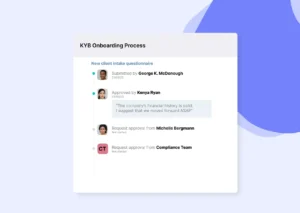
Our legal client intake templates cover e-signatures, ID verification and audit trails. Every upload, approval and signature is time-stamped, which shows who did what and when.
Book a demo call to walk through your firm’s version of this checklist with the Clustdoc team.
There is no standard timeline. It depends on three things: how fast conflicts clear, when the signed engagement letter comes back and whether the first files arrive complete.
An individual client with a simple matter can move quickly. A company with several owners to verify, or a case that needs medical records from a hospital, usually takes longer. A due date on every request makes missing files show up early.
Not always, but some fee arrangements do. A contingent fee agreement must be in writing and signed by the client (ABA Model Rule 1.5). With that kind of fee, the firm is paid out of the result of the case.
For other fees, the model rule prefers writing but does not demand it, and state versions can differ. A signed letter for every matter is the simplest record of what both sides agreed.
Name one owner for the whole sequence, usually a practice manager or a paralegal. The responsible lawyer still clears the conflict check and signs the engagement letter.
In a solo firm the same person does all of it. Writing the steps down matters more there, because nobody else will spot a skipped one.
Often, yes. In the US, a signature or contract cannot be denied legal effect just because it is electronic (the federal ESIGN Act).
That law does not cover records governed by rules on wills, adoption or divorce, or official court documents. Other countries set their own rules. In England and Wales, a will must still be signed in front of two or more witnesses (Wills Act 1837, section 9).
Still stitching emails, files, and approvals together?
Clustdoc gives teams one place to run client-facing work, boost customer engagement and increase compliance.

Claire writes about customer onboarding, digital processes, and the day-to-day challenges faced by operations teams. At Clustdoc, she focuses on practical insights: how organizations collect information, guide customers through complex steps, and improve service delivery with automation.