An engagement letter helps you and your client agree on what work will be done, how much it will cost, and what each party is responsible for. While many firms use these letters as a standard part of client onboarding, some are also legally or professionally required to have them.
The requirements depend on the services you provide and the rules that apply to your profession. Professional standards, court rules, and national laws may all require written agreements, but they can differ in what information must be included and who needs to sign.
Understanding these requirements helps you prepare engagement letters that meet the rules for each service.
Auditing standards give a simple reason for putting the terms in writing. It helps avoid misunderstandings, such as a client expecting the firm to do the client’s own work.
An engagement letter, also called a letter of engagement, is the written agreement for one job. It says what the firm will do, what the client will do and how the fees work.
Each rule has its own list, but these items come up often:
An audit needs the terms in writing. For a tax return, the Treasury rules only list clear terms as a best practice.
|
Work |
Rule |
Written letter |
|---|---|---|
|
Public company audit |
AS 1301 (Public Company Accounting Oversight Board) |
Required, given to the audit committee yearly |
|
Private company audit |
AU-C 210 (American Institute of Certified Public Accountants, AICPA) |
Required, or another written agreement |
|
Preparing, compiling or reviewing financial statements |
AR-C 70, 80 and 90 (AICPA) |
Required, signed by both sides |
|
Tax returns and tax advice |
Circular 230, 31 CFR 10.33 (US Treasury) |
Not required, but clear terms are a best practice |
|
Legal work |
Model Rule 1.5 (American Bar Association) |
Preferably in writing; signed by the client for contingent fees |
|
Legal work in New York |
Part 1215 (New York courts) |
Required, with four exceptions |
|
Accounting and legal work in France |
Decree 2012-432 and law 71-1130 |
Required, with a few exceptions for lawyers |
When you’re onboarding a new accounting client, the service you provide decides which standard the accounting engagement letter follows. Private company audits, compilations and reviews follow standards from the American Institute of Certified Public Accountants (AICPA). Public company audits and tax work have their own rules.
Public company audits follow AS 1301 of the Public Company Accounting Oversight Board. The auditor records the terms in an engagement letter and gives it to the audit committee every year.
The auditor has the right person or people sign it for the company. If the signer is not the committee or its chair, the auditor checks that the committee agreed to the terms.
For private companies, AU-C 210 asks for an audit engagement letter or another written agreement. The letter must cover the objective and scope, each side’s duties, the accounting framework used and the reports to expect.
It must also warn that even a properly planned and performed audit may miss a material misstatement. That is an error or fraud big enough to matter.
In the letter, management agrees to provide the information the auditor asks for. That is where a prepared by client (PBC) list begins.
For firms that prepare, compile, or review financial statements, a verbal agreement is not sufficient. The Statements on Standards for Accounting and Review Services (SSARS) require a written engagement letter or another form of written agreement that clearly establishes the terms of the work.
The agreement must be signed by both the accountant or accounting firm and the client’s management or those charged with governance, such as the board of directors (AR-C 70, 80, and 90). For review engagements, the letter must also explain that a review is much narrower in scope than an audit and does not include an audit opinion.
However, these requirements do not apply to every accounting service. If a firm only provides bookkeeping assistance without being engaged to prepare financial statements under SSARS, the work falls outside these standards (AR-C 70). In that case, SSARS does not require an engagement letter, although having one can still help clarify the services and fees.
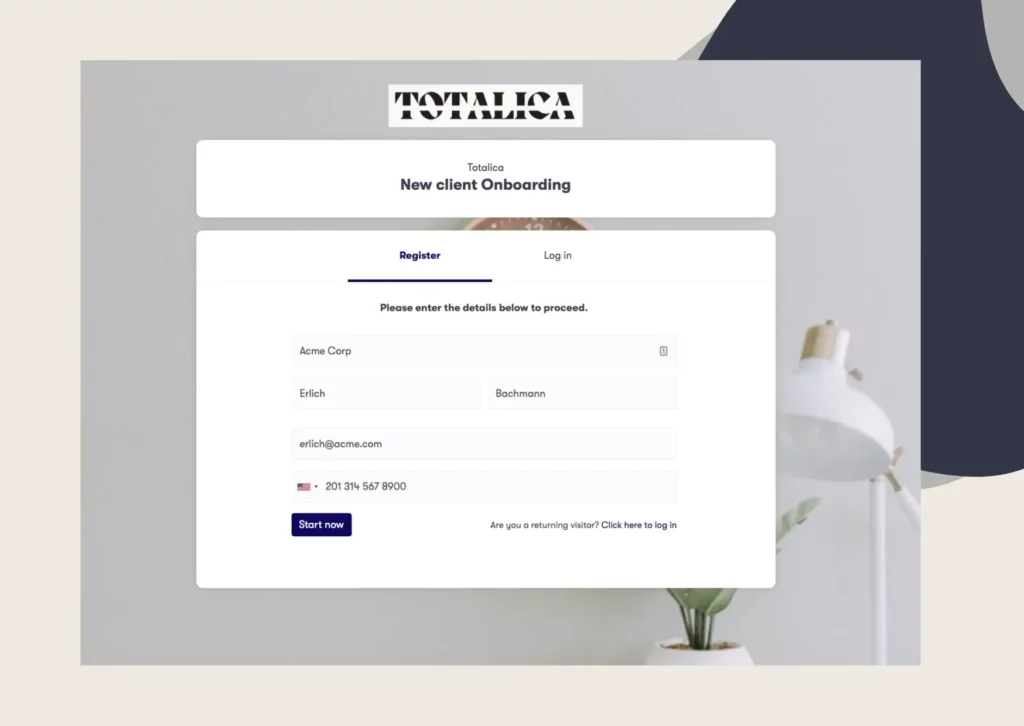
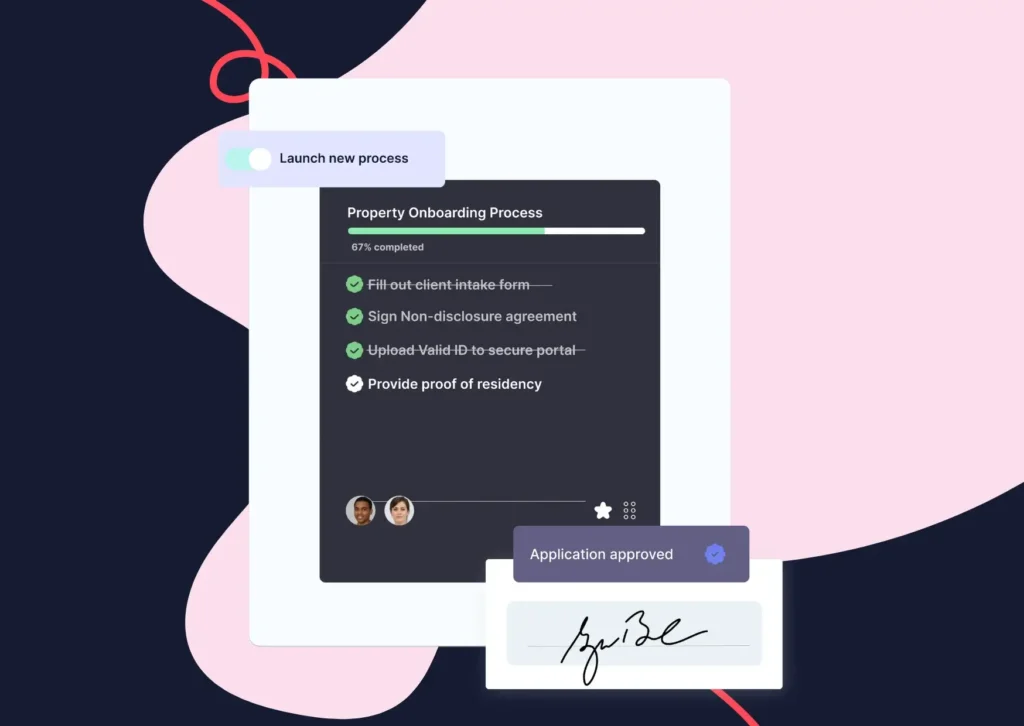
Clustdoc’s accounting client onboarding software lets you design your process once. Every new client then goes through the same steps, from first form to signed engagement letter.
Tax work follows different rules. Circular 230, the Treasury rules for tax professionals, does not require an engagement letter.
It lists clear communication about the terms as a best practice (31 CFR 10.33). For example, the advisor should find out what the advice is for. Both sides should be clear on its form and scope.
The AICPA’s tax standards suggest considering a written understanding when representing a client before a tax authority.
Some clients also sign a consent to let you use or share their tax return information. For clients that do not file a Form 1040, such as corporations and trusts, the consent can take any format, including a section of the engagement letter (Treasury Regulation 301.7216-3(a)(3)(iii)). It still needs the core details the rule lists, including the client’s signature and date.
In law firm client onboarding, the letter goes out after the conflict check and the identity check. The American Bar Association publishes the Model Rules, but each state adopts its own rules for lawyers. So check your state’s version.
Model Rule 1.5 says lawyers must tell clients the scope of the work and how fees and expenses are charged. This must happen before the work starts or within a reasonable time after, preferably in writing.
A regular client charged on the same basis or rate needs no new explanation. Any later change in the basis or rate must still be explained.
Contingent fees, which depend on the outcome of the case, need a written agreement signed by the client. It must say how the fee is worked out. That includes the lawyer’s percentage if the case settles, is tried or is appealed.
It must also list the expenses that come out of any money recovered. It must say whether they come out before or after the fee is calculated. Any expenses the client pays whether or not they win must be named clearly.
New York lawyers need more than the model rule. Part 1215 of the state’s court rules requires a written letter of engagement before work starts. It can follow within a reasonable time if that is not practical or the scope is not yet known.
The letter explains the scope, fees, expenses and billing practices. Where relevant, it says the client may have a right to arbitrate fee disputes under Part 137. A signed retainer agreement covering the same points can replace it.
The rule does not apply when:
France makes the written agreement a legal duty for both professions. An expert-comptable, the French chartered accountant, must have a written contract with each client (article 151 of decree 2012-432).
The contract defines the engagement and the rights and duties of each side. It can take the form of a lettre de mission, the French term for an engagement letter.
For an avocat, a lawyer in France, the fee agreement is called a convention d’honoraires (article 10 of law 71-1130). The lawyer and the client must agree on it in writing. The exceptions are emergencies, events beyond anyone’s control and some legal aid work.
Among other things, it states the fee, or how it is worked out, for the work that can be foreseen. It also lists the expected costs and expenses.
The terms in an old letter may no longer match the work you do today. Public company auditors give the audit committee the engagement letter every year. On a recurring private company audit, the auditor checks whether the terms need to change.
If they do not, the auditor reminds management of the terms and records the reminder. If they do, the new terms go into a new letter or other written agreement (AU-C 210).
Lawyers have similar rules. The American Bar Association’s model rule says lawyers must explain any change in the basis or rate of fees or expenses. In New York, a significant change in the scope or the fee calls for an updated letter.
Our legal workflow software sends engagement letters for new matters, updated terms and client authorizations through one signing workflow.
Book a demo call and sign an updated engagement letter yourself. We will send it to you the same way your client would receive it.
An engagement letter, also called a letter of engagement, is the written agreement between a firm and a client for one job. It sets out the scope of the work, each side's responsibilities and how the fees and expenses work. Some rules also say who has to sign it.
It works as the written agreement for the job. The US standards for compilations and reviews accept "an engagement letter or other suitable form of written agreement".
New York also lets lawyers use a signed retainer agreement instead. Whether a letter can be enforced in court is a contract law question where you practice.
For compilations, reviews and financial statement preparation, the accountant or firm signs with the client's management or board. For public company audits, the right person signs for the company, and the audit committee agrees to the terms. With a lawyer, a contingent fee agreement must be signed by the client.
Not always. Public company auditors give the audit committee the letter every year.
On a recurring private company audit, the auditor reminds management of the terms when they have not changed. In New York, a lawyer sends an updated letter when the scope or fee changes significantly.
Circular 230, the Treasury rules for tax professionals, does not require one. It lists clear communication about the terms as a best practice.
A letter still records scope and fees. For clients that do not file a Form 1040, it can also hold their section 7216 consent to use or share tax return information.
Still stitching emails, files, and approvals together?
Clustdoc gives teams one place to run client-facing work, boost customer engagement and increase compliance.

Claire writes about customer onboarding, digital processes, and the day-to-day challenges faced by operations teams. At Clustdoc, she focuses on practical insights: how organizations collect information, guide customers through complex steps, and improve service delivery with automation.