Form 8867 is mostly a column of yes and no boxes. Many lines add a third box marked N/A, and a blank line asks for the documents you relied on.
Several boxes cover the interview you had with the client. They ask whether you asked questions, whether anything looked incorrect or incomplete, and whether you wrote the answers down at the time.
Another asks whether you asked reasonable follow-up questions. The form never lists those questions. They depend on what each client tells you and on the rules for each benefit.
The form is the preparer’s statement, not the client’s. IRS Form 8867 is the Paid Preparer’s Due Diligence Checklist. A paid preparer completes it for any return or refund claim with one of four benefits.
Two are credits on their own: the earned income credit (EIC, or EITC) and the American opportunity tax credit (AOTC). The third covers the child tax credit (CTC), additional child tax credit (ACTC) and credit for other dependents (ODC). The fourth is head of household filing status.
The Form 8867 due diligence checklist has 15 numbered questions in six parts.
The form belongs to the preparer who decided the client’s eligibility, or worked out a credit’s amount. That holds even when someone else signs the return. A nonsigning preparer gives the completed form to the signing preparer, on paper or electronically.
One return can carry several Forms 8867, and e-file accepts up to four (Form 8867 instructions). In the instructions’ example, you handle the EIC and a coworker handles the AOTC and signs. Two forms then go with the return.
Two points matter before the next filing season. The current form is the November 2024 revision, and the Form 8867 instructions were revised in November 2025.
First, from tax year 2025, a taxpayer claiming the CTC or ACTC must have a valid Social Security number. On a joint return, only one spouse needs one, and the other may have a valid ITIN.
Second, the IRS has posted a draft November 2026 revision of the form. It adds Social Security number questions for the CTC, ACTC and AOTC, and it is not final yet.
For these four benefits, paid preparer due diligence rests on four requirements in Treasury Regulation 1.6695-2(b). The form’s Part VI, the eligibility certification, says you have complied if you do four things, lettered A to D. Question 15 asks you to certify that your answers are true, correct and complete, to the best of your knowledge.
Base your answers on what the client told you, or what you otherwise reasonably obtained or knew (Treasury Regulation 1.6695-2(b)(1)(ii)). Use information for the tax year of the return only (Form 8867 instructions, line 1).
When you e-file, the form goes in with the return. For a paper return, give it to the client to file with the return (Treasury Regulation 1.6695-2(b)(1)). If you mail the signed return for the client, mail the form with it (Form 8867 instructions).
If a return went in without it, do not send the form separately. Doing so has no effect on a possible penalty (IRS, Completing Form 8867).
A credit figure with no calculation behind it cannot be checked later. Complete the IRS worksheet and the related forms and schedules for each credit claimed.
The worksheets for the EIC and the CTC, ACTC and ODC are in the Form 1040 or Schedule 8812 instructions. For the AOTC, the worksheet is in the Form 8863 instructions.
Your own worksheet is fine if it holds the same information. Then keep a record of the method and information you used (Treasury Regulation 1.6695-2(b)(2)).
The knowledge requirement asks what a reasonable, well-informed preparer who knows the law would conclude. You must not use information you know, or have reason to know, is incorrect. You also may not ignore what the information implies.
If information looks incorrect, inconsistent or incomplete, make reasonable inquiries and record them at the time (Treasury Regulation 1.6695-2(b)(3)). That record should show whom you asked, when, what you learned and how it affected the return (Form 8867).
In Example 1 of the instructions, a 25-year-old client says they have children aged 10 and 12. They also say their lawn care business earned $12,000 with no expenses. Both call for follow-up questions: are the children foster or adopted, and were there equipment or fuel costs?
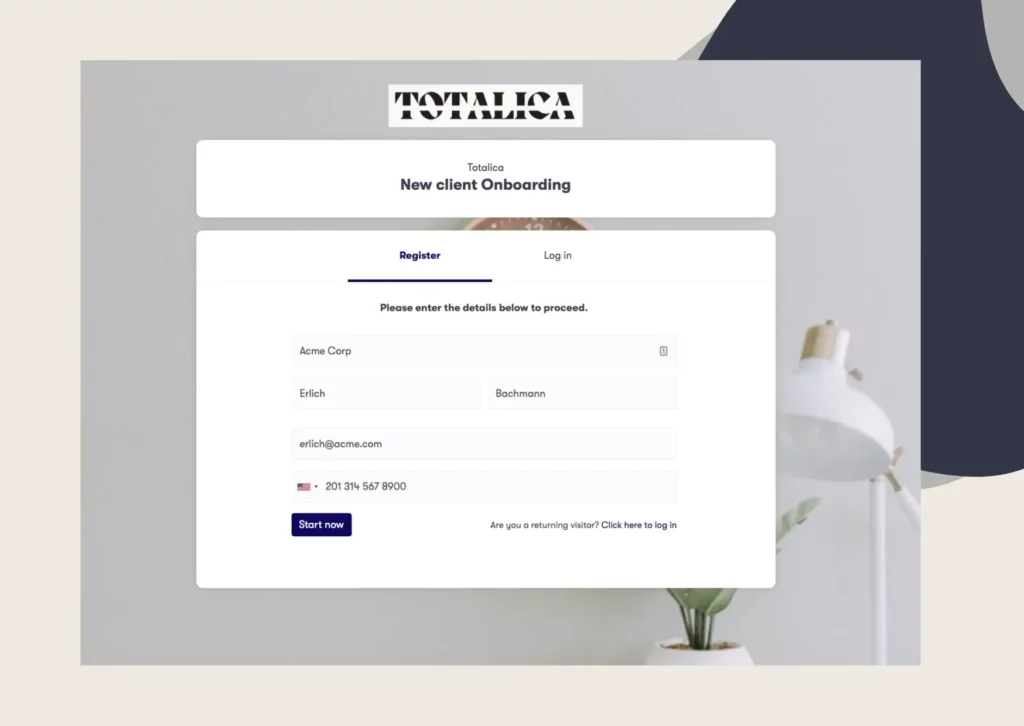
If you ask them on a Clustdoc onboarding form, each submission, update and approval gets a timestamp. Each answer keeps the date the client gave it.
The file has to outlive the filing season. Keep these five records (Form 8867, Part VI):
Keep them for three years (Treasury Regulation 1.6695-2(b)(4)(ii)). The clock starts on the return’s due date without extensions. If you e-filed later, or gave the client a paper return to sign later, count from that day instead.
For a nonsigning preparer, the day they handed their part to the signer replaces those two dates. Paper or electronic records are both fine, if electronic storage meets Revenue Procedure 97-22 (Form 8867 instructions).
Part II’s EITC due diligence questions include whether you asked about each child’s residency over half the year. The IRS lists example documents for residency and Schedule C income, but none is specifically required. You do not need to ask again for documents you already requested for that tax year.
|
Benefit or income |
What Form 8867 asks about |
Documents you may rely on |
|---|---|---|
|
EIC with a qualifying child |
The child’s residency over half the year; the tiebreaker rules |
School, landlord, health care or childcare provider records |
|
CTC, ACTC and ODC |
Each dependent is a US citizen, national or resident; rules for separated parents |
The same residency records; Form 8332 where needed |
|
AOTC |
Proof for the credit |
Form 1098-T, tuition and expense receipts |
|
Head of household |
Unmarried or considered unmarried; paid over half a home’s upkeep for a qualifying person |
Rent receipts and household bills (Form 14824 lists examples) |
|
Self-employment income |
Questions for a complete, correct Schedule C |
Business license, Forms 1099, bank statements, income and expense records |
The penalty is charged per failure, not per return. It is $650 for each failure on a return or refund claim filed in 2026 (Revenue Procedure 2024-40). There is no cap on the total.
For a return filed in 2027, it is $665 (Revenue Procedure 2025-32). Each year, the IRS adjusts it for inflation.
Each benefit counts separately (Treasury Regulation 1.6695-2(a)(1)). A return filed in 2026 that misses the rules for all four benefits can cost $2,600 (Form 8867 instructions).
The employing firm can be penalized too, but only in three cases (Treasury Regulation 1.6695-2(c)). One is when principal management took part in the failure, or knew of it before filing. That also covers principal officers and a branch office’s management.
In the other two, the firm had no reasonable procedures, or ignored its own procedures willfully, recklessly or through gross indifference.
The penalty does not apply if the preparer satisfies the IRS on two points, given all the facts. First, their normal office procedures are reasonably designed and routinely followed to ensure compliance. Second, the failure was isolated and inadvertent (Treasury Regulation 1.6695-2(d)).
A firm penalized under the firm rule cannot use that exception.
The penalty exception rests on a routine, not one preparer’s memory. Put the questions for each benefit into one tax preparer due diligence questionnaire, with one section per benefit. Send the head of household due diligence questions only to clients who may file with that status.
The regulation’s examples start from a standard questionnaire and still require follow-up questions. Every answer, follow-ups included, should carry its date.
Ask whether any credit was ever disallowed or reduced, because claiming it again may need Form 8862. Clients should also know to keep their documents for three years, since the IRS may ask for them.
Add the questionnaire to your usual tax preparation checklist. For a new client, the questionnaire can go out with the document request. In accounting client onboarding, the engagement letter and identity checks come before that request.
Our reusable request lists for tax preparation keep each benefit’s document requests ready to send again next season. Preparing the return, completing Form 8867 and computing the credits stay in your tax software.
Book a demo call with whoever runs your intake in the room. We will show how one benefit’s questions would look on a Clustdoc form.
Form 8867 is the paid preparer's due diligence checklist. Paid preparers complete it for returns and refund claims with the EIC, CTC, ACTC, ODC, AOTC or head of household status. Its answers record the checks the preparer made, and the preparer certifies them.
A paid preparer who decides a client can claim the EIC, CTC, AOTC or head of household status completes it. So does a preparer who works out a credit's amount, even if someone else signs the return. Taxpayers who prepare their own returns do not complete it.
Yes, it is filed with the return or amended return that claims one of the four benefits. An e-filed return carries it electronically.
For a paper return, the client files it with the return. If the signing preparer mails the return after the client signs it, the form goes with it.
A preparer can be charged a penalty for each failure: $650 on a return filed in 2026, $665 on one filed in 2027. Each of the four benefits counts separately, the CTC, ACTC and ODC as one. The employing firm can be penalized too in some cases, and the IRS can suspend a preparer from e-file.
Three years. Count from the return's due date without extensions or, if later, the day it was e-filed or given to the client to sign. A nonsigning preparer counts from the due date or, if later, the day they handed their part to the signer.
Still stitching emails, files, and approvals together?
Clustdoc gives teams one place to run client-facing work, boost customer engagement and increase compliance.

Claire writes about customer onboarding, digital processes, and the day-to-day challenges faced by operations teams. At Clustdoc, she focuses on practical insights: how organizations collect information, guide customers through complex steps, and improve service delivery with automation.