New hire paperwork includes several important documents that HR needs to collect before or shortly after an employee starts work. These include Form W-4, Form I-9, payroll details, signed offer letters and handbook acknowledgments.
Some documents also have legal deadlines. For example, employers must complete their part of Form I-9 within three business days of the employee’s first day. Form W-4 helps determine how much federal income tax to withhold from their paycheck.
When HR collects these documents through emails and paper forms, it’s easy to lose track of what’s missing. A clear new hire paperwork checklist helps your team collect everything on time and avoid delays with payroll or compliance.
What exactly goes into a new hire’s packet? New hire paperwork is every form and document a new employee completes, signs or receives when they join a company.
In the US, federal and state rules set part of it, such as Form I-9 and Form W-4. The rest comes from your own company, such as the offer letter, the direct deposit form and the employee handbook.
HR teams also call it onboarding paperwork or the new hire packet. For UK employers, the rules differ, starting with a check of the person’s right to work before employing them.
|
Document |
Who completes it |
When |
What the employer does with it |
|---|---|---|---|
|
Form I-9 |
New hire, then employer |
Section 1 by the first day, Section 2 within three business days |
Examines documents, keeps the form |
|
Form W-4 |
New hire |
When they start work |
Withholds federal income tax |
|
State withholding form |
New hire, where required |
When they start work |
Withholds state income tax |
|
New hire report |
Employer |
Within 20 days, sooner in some states |
Sends it to the state |
|
Offer letter |
Employer; new hire signs |
Before the start date |
Keeps the signed copy |
|
Direct deposit form |
New hire |
Before the first payday |
Sets up direct deposit |
|
Handbook acknowledgment |
New hire |
By the first day |
Keeps proof of receipt |
|
Emergency contact form |
New hire |
By the first day |
Keeps it for emergencies |
|
Benefits enrollment forms |
New hire |
By the plan’s deadline |
Sends choices to the provider |
These new hire forms follow government rules, so their wording and deadlines are not yours to change.
US Citizenship and Immigration Services (USCIS) says every US employer must complete Form I-9 for each new hire, citizens included. The new hire fills in Section 1 by the first day of work, but not before accepting the offer.
Section 2 is the employer’s part. The new hire chooses which documents to show from the Lists of Acceptable Documents, and the employer cannot pick them.
The employer examines the originals in person, or remotely under a Department of Homeland Security procedure for certain employers. It records the details in Section 2 and keeps the form on file, since Form I-9 is not filed with USCIS.
The Internal Revenue Service (IRS) page on hiring employees asks for a signed Form W-4 from each new hire. Payroll uses this Employee’s Withholding Certificate to work out how much federal income tax to withhold.
Where a state or city taxes wages too, the new hire may fill in a state or local withholding form.
Electronic new hire paperwork can include the W-4, as the IRS lets employers set up a system to receive it. Its Publication 15 points to the rules for that system in Treasury Regulation 31.3402(f)(5)-1(c).
Unlike the other forms, the new hire never fills this one in. Under federal law, each new or rehired employee must be reported to the state where they work within 20 days of hire. Some states require it sooner.
The new hire reporting guidance from the federal Administration for Children and Families lists seven details. They are the employee’s name, address, Social Security number and date of hire, plus the employer’s name, address and Federal Employer Identification Number.
Many employers send a copy of the W-4 as their report, since it already collects these details. Electronic filing on the state’s new hire website is preferred, though.
Rehires count too, once someone returns after a break of at least 60 days in a row.
The rest of the new employee paperwork comes from your company, and what goes in it depends on the role.
The offer letter is usually the first document a new hire receives. It confirms their job title, salary and start date. The employee must accept the offer before completing Section 1 of Form I-9.
Some positions also require an employment contract or confidentiality agreement. Once signed, HR stores these onboarding documents for new hires in the employee’s file so payroll can check the agreed terms.
New hires also receive the employee handbook and company policies, including workplace conduct and safety rules. They usually sign an acknowledgment form to confirm they’ve received them. HR keeps this record in case questions about company policies come up later.
Payroll needs the new hire’s bank details before the first payday, usually on a direct deposit authorization form. If that form comes in late, the first pay may not reach their account on time.
An emergency contact form gives HR someone to call if the new hire is hurt or falls ill at work.
Benefits enrollment forms follow if you offer health insurance or a retirement plan, each with the plan’s own deadline.
Most pre-employment paperwork can be done between the accepted offer and the first day of work. The offer letter, direct deposit form, emergency contacts and handbook acknowledgment can all come back before the start date.
The new hire can complete Section 1 of Form I-9 early too, once they have accepted the offer. It is due by the first day of work, when the new hire also hands in the signed W-4.
Section 2 follows within three business days, or by the first day if the job lasts less than that. Payroll applies the W-4 from the first wage payment. The new hire report is due within 20 days of hire, or sooner where your state requires it.
You then keep the I-9 until three years after hire or one year after the job ends, whichever is later.
On paper, new hires fill in forms by hand and bring them to the office, sometimes more than once. HR then types the same details into the payroll or HR system and chases anything missing by email.
Digital new hire paperwork still has to follow each form’s rules. For example, US Citizenship and Immigration Services says its fillable Form I-9 must be printed and signed by hand. That fillable PDF does not meet the federal standards for electronic I-9 systems.
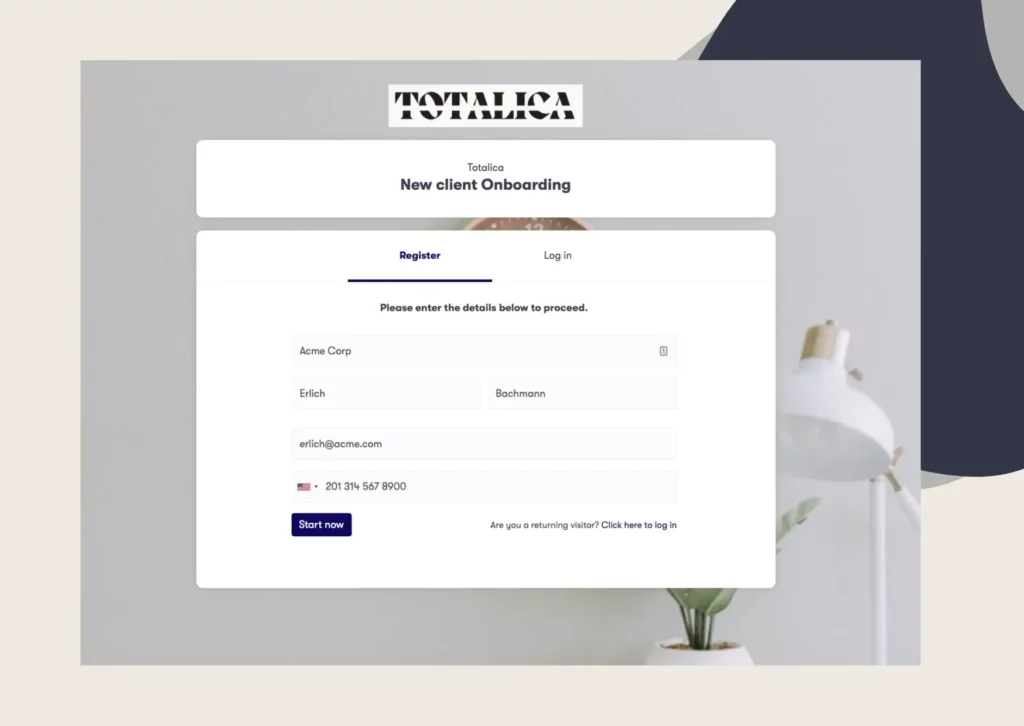
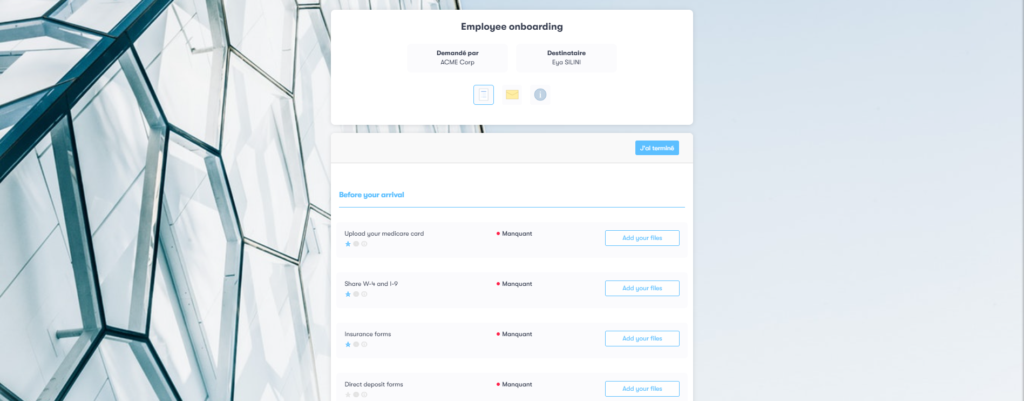
Clustdoc’s employee onboarding software puts your own documents into one online checklist and helps HR track the federal deadlines. Each new hire opens it from a phone or computer and can finish most of it before their first day.
Each role or contract type gets its own template, so new hires see only the steps for their job. From there, they can:
All new hire documents are stored in each employee’s record and organized by onboarding step. HR can approve or reject documents, leave comments about what needs to be corrected, and send files to payroll or other teams for approval.
Automatic email and text reminders help new hires submit missing documents on time. HR can also assign internal tasks with clear owners and deadlines, including the Form I-9 document check, which must be completed within three business days of the employee’s first day.
Access permissions control who can view sensitive employee information, such as bank details and contracts. An audit trail records every action with a timestamp. Our platform is also SOC 2 Type II certified, and we follow the General Data Protection Regulation (GDPR) when handling employee data.
Once a new hire signs their contract, their information can be shared with your other systems automatically. Through Zapier, Make or our application programming interface (API), you can send employee details directly to your payroll software or HR system without entering them again.
Check off each item for every new hire:
Paperwork is one part of an employee onboarding checklist, which also plans the first day and the weeks after it.
Book a demo call and bring the forms you send new hires today, on paper, as PDFs or by email. We will match each one to a checklist step and show what stays with HR, like the I-9 document check.
In the US, you need a completed Form I-9 and a signed Form W-4 for each new hire. Some also fill in a state withholding form. Your company then adds its own documents, such as the offer letter, direct deposit form, emergency contacts and handbook acknowledgment.
It is often called the new hire packet or onboarding paperwork. Its two federal forms have official names: Form I-9, Employment Eligibility Verification, and Form W-4, Employee's Withholding Certificate.
Send each new hire one online checklist with your forms, document requests and e-signatures, and set reminders for anything missing. In Clustdoc, HR reviews each file as it arrives, and Zapier or Make can pass the data to payroll. Federal forms keep their own rules, and the employer still examines the documents for Form I-9.
A human resources information system (HRIS) keeps the employee record once someone is hired. Onboarding software such as Clustdoc collects your own forms, documents and signatures before day one. Zapier or Make can then move the completed data into the HRIS, so HR does not type it in twice.
Still stitching emails, files, and approvals together?
Clustdoc gives teams one place to run client-facing work, boost customer engagement and increase compliance.

Claire writes about customer onboarding, digital processes, and the day-to-day challenges faced by operations teams. At Clustdoc, she focuses on practical insights: how organizations collect information, guide customers through complex steps, and improve service delivery with automation.
This material is for informational purposes only. Nothing in it constitutes legal, financial, or other professional advice or carries any assurance of legal validity in any jurisdiction. Clustdoc shall not be liable for the material or for any action taken on the basis of it.