A deal can look ready to move until underwriting opens the file and finds that the latest bank statements are missing, the equipment quote has expired, or a required form was never signed.
For lenders and brokers, that means another email to the applicant and another delay before the deal can be assessed. A good equipment finance application should give the credit team the business details, financial information, and equipment documents they need without several rounds of follow-up.
This guide breaks down what to collect, which documents usually matter, and how to organise the application process so a complete file reaches underwriting the first time.
An equipment finance application collects business and financial details so a lender can decide whether to fund equipment. Lenders usually need financial statements, IDs, and quotes. A guided digital flow speeds up approval, and platforms like Clustdoc gather the application and its documents in one portal.
A complete application has four parts. Business identity, financial standing, equipment details, and the consents that let you run checks.
The business section covers legal name, entity type, time in business, and ownership. The financial section captures revenue, existing debt, and bank details for repayment. The equipment section records what is being financed, who the vendor is, and the total cost.
The consents are the part teams forget. You need signed authorization to pull commercial credit and verify identity, and the rules on this vary by country. Build the consent step into the application itself so no file moves forward on incomplete authorization.
The same structure works for an equipment lease application. The ownership terms differ, but the information you collect is nearly identical, so one well-built flow can serve both products.
Requirements scale with deal size and risk. The equipment financing documents below cover most cases, from small ticket deals to commercial equipment financing at larger amounts.
These prove the business exists and can repay. Most lenders ask for:
Keep your equipment loan requirements consistent across deals of the same size. When every underwriter asks for something different, borrowers get confused and files arrive incomplete.
The application needs the vendor quote or invoice for the exact equipment being financed. It should show the supplier, the model, the price, and the delivery terms.
Heavy equipment financing usually adds more. Serial numbers, condition reports for used machines, and sometimes an inspection or appraisal before approval.
Collect the quote as a document upload rather than numbers typed into a form. Underwriters need to see the source paper, and typed figures drift from the real invoice.
Lenders verify the people behind the business, not just the business. That usually means government issued ID for owners and signatories, plus documents showing who holds what share.
KYC and AML obligations apply to most equipment financing, and the thresholds vary by country and lender type. The safe habit is simple. Verify identity on every application above your own internal limit, and keep the evidence attached to the file.
Collection is where most delays start. The flow below keeps everything in one pass, whether you run it through a portal or assemble it by hand.
Start with a single equipment finance application form that captures business, financial, and equipment details in one structured pass. One form, one link, one place to check progress.
Use conditional questions so a sole trader is never asked for corporate ownership charts. Keep required fields to what underwriting actually uses, because every extra field costs you completed applications.
If you want a working starting point, this equipment finance application template is free to copy and adapt.
List every required document inside the application flow itself. When borrowers see the full list upfront, they gather everything once instead of drip feeding files over two weeks.
Set clear file rules. A named upload slot for each document, accepted formats, and a visible checklist showing what is still missing. A borrower who can see three items outstanding will send three items.
Email is where business equipment financing files usually fall apart. Attachments hit size limits, land in spam, or arrive unlabelled, and someone has to sort them by hand.
Run identity checks during intake, not as a later phase. Catching a failed KYC check on day one saves all the underwriting work you would have spent on that file.
Then review documents where they were collected. Accept the good ones, reject the bad ones with a reason, and let the borrower replace only what was rejected. We handle this with accept and reject controls on each file, so the borrower always sees exactly what to fix.
Route the completed file through a defined approval path. Credit review first, then final sign-off, with each decision recorded against the application.
Send agreements for electronic signature as soon as approval lands. Frameworks like the ESIGN Act and eIDAS govern eSignatures, and what counts as valid depends on your jurisdiction and document type.
Once signed, hand the file to funding with the full document set attached. Nothing should need to be collected twice at this stage.
Most delays in equipment financing are not underwriting delays. They are waiting-for-documents delays, and they compound quietly across a pipeline.
Automated reminders remove the biggest one. A borrower with two missing bank statements gets a scheduled nudge, so your team sends fewer reminder emails by hand. Deadlines with reminders attached move files that goodwill alone does not.
Status visibility removes the second. When the borrower, the broker, and the underwriter all see the same checklist, nobody has to email to ask where things stand.
The third fix is stopping incomplete submissions at the door. Required fields, required uploads, and validation rules mean a file cannot be sent in half done. Every incomplete application you refuse to accept is a follow-up cycle you never have to run.
Everything above can run on spreadsheets and email. It just runs slowly, and every step needs a person to push it along.
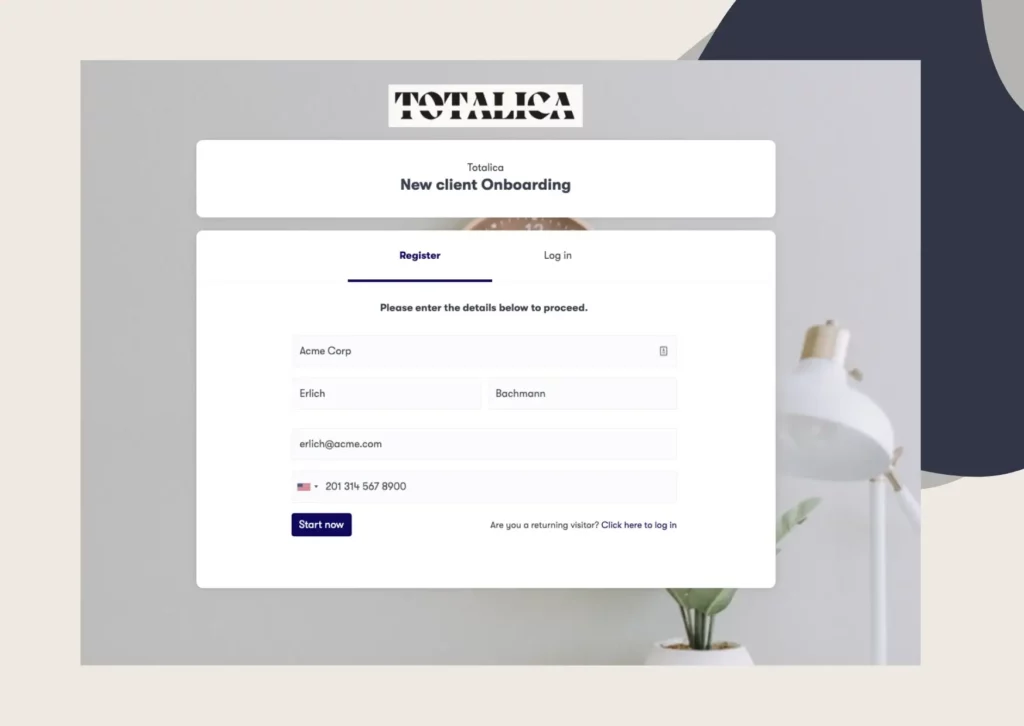
A loan documentation platform runs the same flow in one branded portal. Our platform combines the application form, document collection, KYC and KYB identity checks, approval routing, and eSignatures in a single workspace. Automated email and SMS reminders chase whatever is still outstanding.
It can also score and flag risky or incomplete submissions automatically, using rules you define. The payoff shows up in cycle time, and customers report cutting onboarding time in half after moving repeated flows into one system.
If you run more than one lending product, these loan application form templates cover the wider set, from credit applications to commercial mortgage files.
Ready to see this flow on your own lending process? Book a demo call and walk through it with the Clustdoc team.
Startups lack trading history, so lenders lean more on personal credit, guarantees, and larger down payments. Build your application to branch for this. When time in business is short, ask for the founder's personal financials and a guarantee automatically.
Most lenders ask for bank statements, tax returns or financial statements, the vendor quote for the equipment, formation documents, and ID for the owners. Larger or riskier deals add appraisals and fuller financials. Publish the exact list upfront so files arrive complete on the first attempt.
It varies by lender and deal size, so no single number is honest. Small ticket deals with complete files often clear within days, while larger commercial deals take longer. The consistent pattern is that incomplete files take the longest, whatever the amount.
Yes, if the flow is built for it. Borrowers should be able to fill the form, photograph documents, and sign from a mobile device. Owner-operators buying machinery are rarely sitting at a desk, and a desktop-only process slows your own pipeline down.
Still stitching emails, files, and approvals together?
Clustdoc gives teams one place to run client-facing work, boost customer engagement and increase compliance.

Claire writes about customer onboarding, digital processes, and the day-to-day challenges faced by operations teams. At Clustdoc, she focuses on practical insights: how organizations collect information, guide customers through complex steps, and improve service delivery with automation.