“Savings.” Sometimes that one word is the whole answer when a form asks where a client’s money comes from. It sounds complete and gives the reviewer nothing to check.
Ask for proof, and the usual reply is a bank statement. It shows the money is there today, not how the client came to have it.
Behind that gap sit two checks with similar names, source of funds and source of wealth. If the two get mixed up, a file can be approved on the wrong proof, or held up for proof it never needed.
A single deposit can answer both questions. Say it comes from savings built up from rent. The savings are the source of funds, and the rental properties are the source of wealth.
Source of funds is where the money a client uses with you comes from. That covers the activity that produced it, such as a salary, and the account that pays it. A simple source of funds example is a house sale paying for the next home.
Source of wealth is how the client came to own everything they have. Common source of wealth examples include a long career, the sale of a business and an inheritance.
The two checks reach different clients. Source of wealth mostly belongs to the enhanced due diligence step, for politically exposed persons (PEPs) and other higher-risk clients.
High-risk countries are the other fixed trigger. A deal that involves a country on the European Commission’s list needs both checks, on the client and its beneficial owners (Directive (EU) 2015/849, Article 18a(1)(c)).
In the UK, the trigger is the call-for-action list of the Financial Action Task Force (FATF). The same checks apply when a client or counterparty is established in a listed country.
Since 30 June 2026, a country on FATF’s increased-monitoring list no longer triggers these checks on its own (regulation 33, as amended by S.I. 2026/621).
Even a low-risk client may need a source of funds check. Firms should watch transactions throughout a relationship, including, where necessary, the source of funds (FATF Recommendation 10). The same words appear in EU and UK rules (Directive (EU) 2015/849, Article 13(1)(d); UK regulation 28(11)(a)).
From 10 July 2027, EU firms must also ask about the source of funds before the relationship starts, where necessary (EU AML Regulation, Regulation (EU) 2024/1624, Article 25).
The US is narrower. The FinCEN rule that names source of funds most directly covers private banking accounts for non-US persons. These accounts hold at least $1,000,000 in funds or other assets and have a relationship manager.
Banks and other covered institutions must take reasonable steps to find out where those funds come from (31 CFR 1010.605(m) and 1010.620(b)).
“Where necessary” is a judgment, so write down why a file did not need the check.
Foreign PEPs need both checks under FATF Recommendation 12. So do domestic and international organization PEPs in higher-risk cases.
Every PEP, family member and close associate needs both in the EU and the UK (Directive (EU) 2015/849, Articles 20 and 23; UK regulation 35(5)(b)). The EU AML Regulation keeps this from 10 July 2027.
French firms look for “l’origine du patrimoine et des fonds”, the origin of the wealth and funds (Code monétaire et financier, R561-20-2).
Since 10 January 2024, UK domestic PEPs, their family and close associates start from a lower risk than foreign PEPs. With no extra risk factors, their checks are lighter (regulation 35(3A)).
The US customer due diligence rule sets no special steps for PEPs, FinCEN and the federal banking agencies said in 2020. Checks should match each customer’s risk. Private banking accounts of senior foreign political figures get enhanced scrutiny (31 CFR 1010.620(c)).
When a payment is far larger or more complex than the client’s profile suggests, it needs its own explanation. In the EU, firms must already examine, as far as reasonably possible, the background and purpose of such payments (Directive (EU) 2015/849, Article 18(2)). The EU AML Regulation also makes firms examine where the funds come from and where they go, from 10 July 2027 (Article 34(2)).
Beyond PEPs and high-risk countries, your customer risk assessment decides which other clients count as higher risk.
Before asking for a single document, a reviewer needs the client’s own account of the money, in writing:
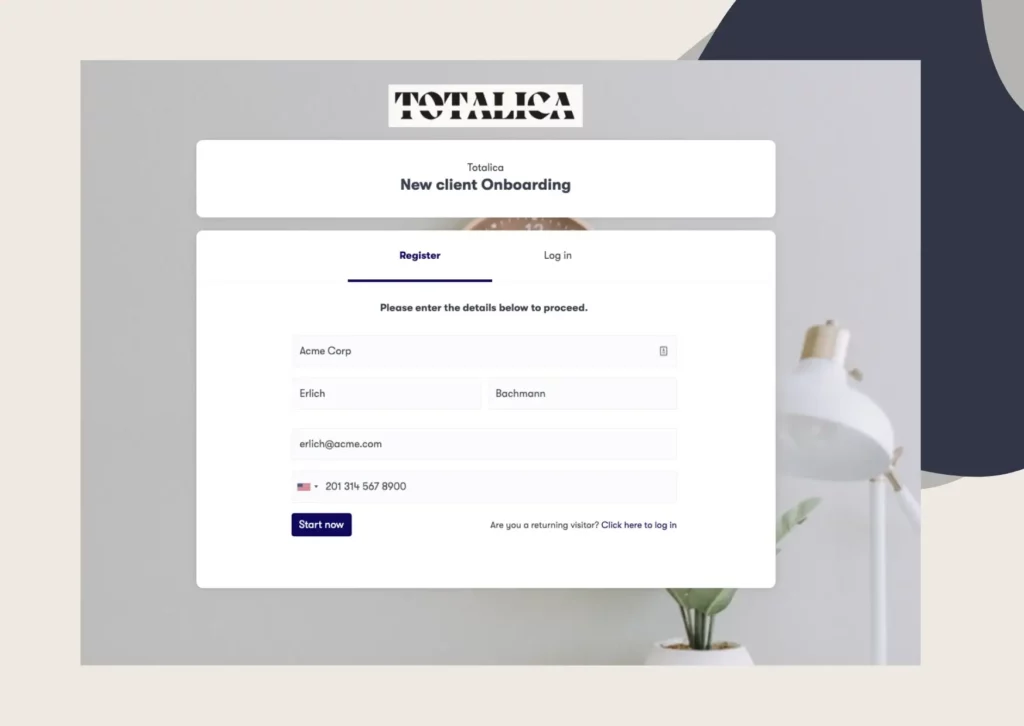
These questions can live in Clustdoc as custom KYC questionnaires, built into your own onboarding flow.
Good source of funds documentation comes from someone other than the client. That could be an employer, a court, or the lawyer or notary who handled a sale. The checks below are practical ones from UK and EU guidance, not a legal list.
|
What the client says |
Proof to ask for |
What must match |
|---|---|---|
|
Salary, dividends or savings |
Payslips or dividend vouchers, and statements over several years |
The name, and income that explains the amount |
|
Sale of a home or other property |
Completion statement and proceeds on a bank statement |
Client was the seller; price, date and amount agree |
|
Sale of a business or shares |
Sale agreement and a company registry extract |
Client held what was sold; figures and dates agree |
|
Inheritance |
Will and grant of probate, or a lawyer’s or notary’s letter |
Client is named; the lawyer or notary is regulated |
|
Gift |
Signed gift letter, donor’s ID and bank statements |
A gift, not a loan; donor’s own source known |
|
Loan |
Loan agreement and payout on a bank statement |
Genuine loan, commercial terms; private lender’s source known |
The Solicitors Regulation Authority (SRA) supervises law firms in England and Wales. In one of its case studies, parents gift the deposit for a first home. A bank mortgage covers the rest.
Check who the donors are and how they relate to the client, and get a signed gift letter. Then find out where the donors’ own money came from, as you would for the client.
A case heard before SRA Adjudicators in January 2025 shows what goes wrong. On one file, the client’s parent made a gift, and a bank statement showed the parent could afford it. The firm never asked where that money came from.
“Source of funds is not proof of funds,” in the SRA’s words.
A company client’s money has a company answer and, sometimes, a personal one. It may come from trading profits, an asset sale or a group loan, and the proof starts with audited accounts. When a parent company pays, add a board resolution and the payment record.
The company’s beneficial owners count too. The EU AML Regulation lists their source of funds and wealth among extra checks for higher-risk clients, from 10 July 2027 (Article 34(4)(c)).
Our document collection can tie each request to the client’s answer. An inheritance answer then opens a request for the estate papers, not a payslip.
Regulators draw this line in different places. Lower-risk PEPs can get lighter steps at UK banks and other firms the Financial Conduct Authority (FCA) supervises (FG25/3).
Those firms can use information already available, such as transaction records, and ask more only if something looks wrong. They still need to seek source of wealth information.
AMLA, the EU’s anti-money laundering authority, sent the European Commission final draft standards on customer due diligence in a report dated 30 September 2026. The Commission has not adopted them yet. Under the draft, the detail needed on source of funds, if any, should match the risk.
Conveyancing at law firms is high risk in the SRA’s view. A written note on funding, with no documents or further questions, is what it calls poor practice.
A client’s word that cannot be verified carries less weight. When a firm relies on that word, the lack of verification should count in judging its value (FATF PEP guidance, paragraph 91).
Source of funds verification means testing the answer against documents from reliable, independent sources. For higher-risk files, AMLA’s draft suggests tax returns, payslips stating the salary, audited accounts and inheritance papers. Ask for documents when:
In our onboarding form, a reviewer can comment on the answer that does not match. The client then clarifies it in the same flow.
When the SRA reviewed source of funds checks at law firms, it found missing audit trails and no recorded reason for decisions. Record the client’s explanation, each document and what it showed. Then note anything left unverified, the decision, and who made it and when.
Sometimes a source of funds check that regulation 28 requires cannot be completed. UK rules then say not to go ahead, to end any existing relationship and to consider whether a suspicious activity report is needed (regulation 31).
EU firms face the same rule from 10 July 2027 (EU AML Regulation, Article 21).
Under EU and UK rules, PEP files also need approval from senior management. That is someone with the knowledge and authority to accept the risk, not always a board member.
Our approval workflow uses simple criteria to decide who approves each file, so a yes to the PEP question can send it to that approver. They see the documents and every comment in one place.
Book a demo call and tell us which source of funds answers send files back most often. You will see the request each one could open in Clustdoc.
Source of funds is where the money for one account or transaction comes from, such as a salary or a house sale. Source of wealth is the origin of everything the client owns. The first explains a payment, the second their overall finances.
Source of funds means where the money a client uses with you comes from. It includes both what produced the money and which account it comes from. Examples include a salary, savings, a property sale, an inheritance, a gift or a loan.
No. EU and UK rules require it for PEPs, their families and close associates. They also require it for clients linked to the EU's high-risk countries or the UK's FATF call-for-action countries.
In the US, FinCEN's rules do not use the term source of wealth. The FinCEN rule that names source of funds most directly covers private banking accounts for non-US persons.
There is no fixed period. UK guidance for law firms says to go back as far as needed to see how the money built up. The less obvious the source, the more information you need.
Sometimes one event explains both. Take a client whose wealth comes mostly from selling their business.
The sale agreement and completion statement then explain this money and much of their wealth. A reviewer may still ask how they built or bought the business.
Still stitching emails, files, and approvals together?
Clustdoc gives teams one place to run client-facing work, boost customer engagement and increase compliance.

Claire writes about customer onboarding, digital processes, and the day-to-day challenges faced by operations teams. At Clustdoc, she focuses on practical insights: how organizations collect information, guide customers through complex steps, and improve service delivery with automation.