Identity Verification Form (IDV)

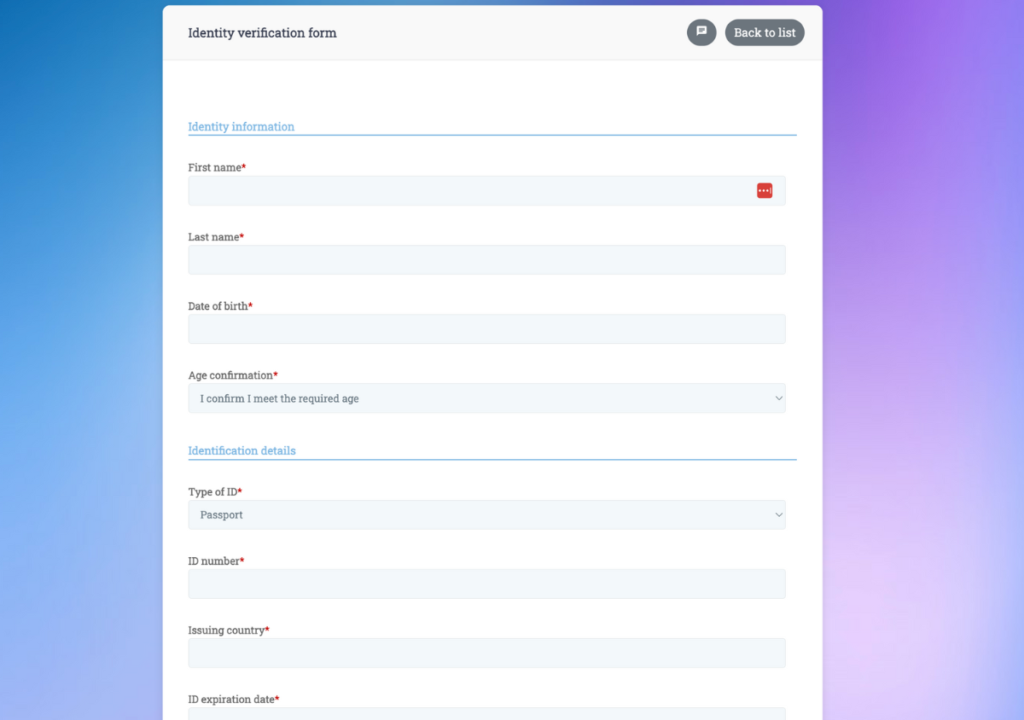
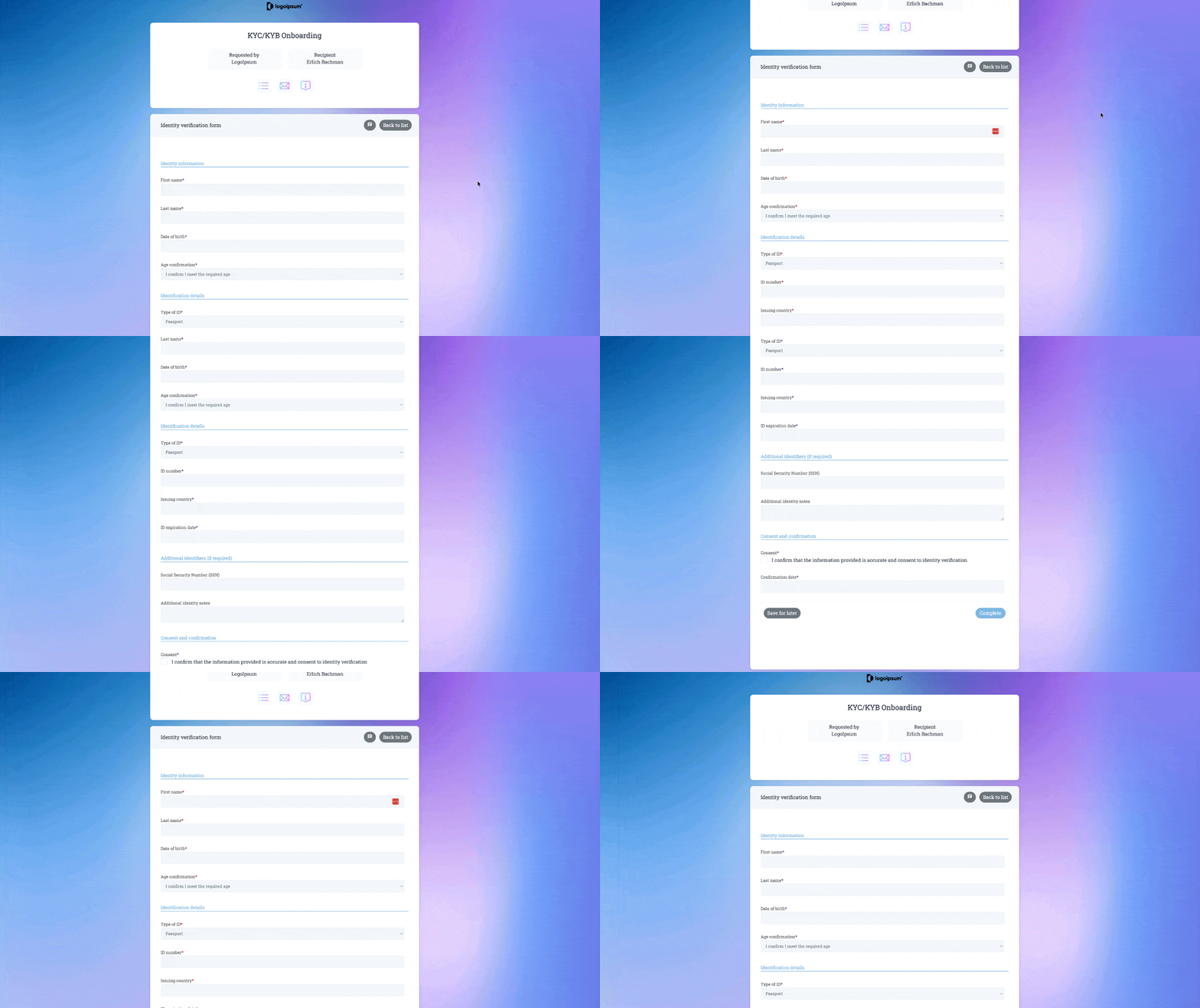
This identity verification form is designed to help organizations collect, verify, and confirm a person’s identity as part of secure, client-facing processes.

*Fully customizable & easy to add to a real client checklist

identity verification form

What is an identity verification or IDV form, and when is it required?

An IDV form is used to collect the information required to verify the identity of a person before granting access to an account, approving a request, or allowing a regulated process to move forward.

It is commonly required during customer onboarding, compliance checks, account creation, or when sensitive actions must be protected.

In many industries, IDV is mandated by government regulations or internal policies, making it a required step before services can be activated.

The role of our form template is to initiate a verification process where identity can be confirmed, documented, and traced over time.

What information is collected to verify identity

IDV rarely relies on a single data point, that’s why our template form is designed to collect information progressively, based on the level of verification required or risk involved.

Core identity information

At a minimum, the form collects the foundational identity attributes needed to uniquely identify a person and associate them with an account or application.

Typical fields include:

• Legal first name and last name

• Date of birth

• Country of residence

• Nationality

• Gender (where required by regulation)

These fields establish a baseline identity record and create a consistent reference point for all subsequent verification steps.

Sensitive identifiers (when required)

In regulated environments, additional unique identifiers may be required to meet legal or eligibility requirements. These are collected as restricted, conditionally displayed fields.

Examples include:

• Social Security Number (SSN) or partial SSN

• National identification number

• Tax identification number

• Age confirmation or age-derived eligibility fields

These fields are typically gated by logic rules and only exposed when the verification level or jurisdiction requires them.

Contact and consistency signals

To support identity consistency checks, the form may also collect contact-related identifiers that help correlate identity data across systems.

Typical fields include:

• Email address

• Phone number

• Current residential address (structured by country, city, postal code)

While not sufficient on their own, these fields strengthen identity matching and anomaly detection.

Legal confirmation and attestation fields

To finalize the identity data capture, the form includes explicit declaration fields that establish accountability.

These typically take the form of:

• Confirmation checkboxes attesting that the information provided is accurate

• Consent acknowledgments for identity verification processing

• Date and timestamp fields

These fields ensure the identity data is declared, acknowledged, and legally attributable to the individual.

How our identity verification form fits within a full compliance workflow

Collecting identity data through an identity verification form is just the start.

Using Clustdoc orchestration capabilities, you can use this form as the very first step in a much larger client-facing process.

From gathering information to verifying and tracking it, Clustdoc makes it possible to collect, confirm, review and reuse data across a variety of workflows. Let see what you could do once you’ve build your own IDV form using Clustdoc.

-> Request supporting identification documents based on form answers

Once the form is filled out, Clustdoc can send a follow-up request to get your contacts to send over government-issued ID documents (like a passport or drivers license) to confirm the details they submitted.

These document requests are linked straight back to the info they initially provided in the form, so you can easily tie each doc to the right person and avoid having to manually sort out which bits of data go with which files.

-> Run verification checks on submitted data and documents

Clustdoc can automatically run checks on the data or documents you’ve collected in your workflow.

All you need to do is collect the name, date of birth, document type and issuer country – and Clustdoc IDV integration with Veriff will take care of the rest.

This means you can:

• Verify identity attributes against trusted sources

• Check ID documents validity

• Flag up any suspicious discrepancies early on

-> Match your form data with the other documents you've gathered

Clustdoc allows you to match the identity info you collected from the form with the actual details from the documents submitted later on by the same person or company.

This helps you confirm whether the details submitted actually match up with what’s on the ID.

For example, the information provided in the form (such as the company owner’s name) can be matched against the data listed on the company’s registration certificate.

By comparing form fields to doc data, you can quickly spot any discrepancies and work out if you need to review further.

-> Apply scoring and decision rules

This Clustdoc identity verification form can also help you out with risk scoring or decision making. You can apply pre-set rules to score identity records, which helps you decide whether to prioritise certain cases or send them down a different verification path.

-> Track expiries and renewals

For any expiry dates mentioned on ID documents, Clustdoc can keep track of when they’re due to expire.

When an ID is about to expire, the system can automatically send out renewal requests and reminders to your contacts, so you don’t have to keep on top of it manually.

Using this identity verification form within Clustdoc workflows

An IDV form like this one would commonly be used by Clustdoc users as part of:

• Merchant onboarding for payment service providers

• Individual or business account setup
• Trust fund or investment account setup
• Authorized signatory verification


Use this IDV form in your client-facing processes using Clustdoc

Within Clustdoc, your IDV form will act as a robust entry point to a broader identity verification workflow, where identity data, documents, and confirmations are collected as part of a guided checklist.

No. This form template collects basic info you need to start the verification process but a robust verification usually involves a few extra checks, reviews or third-party services as well.

The form just provides a structured starting point to capture data about someone's identity, then you can add on top of this form additional steps using Clustdoc process checklist builder.

Absolutely. When you add this IDV form as the first step of your Clustdoc process, you can continue the flow by adding a real-time ID verification steps (using tools like Veriff) or trigger backend verification checks, doc requests, scoring rules and system updates all automatically.

Yes. Once identity information is collected and verified, the form can be reused across multiple workflows within Clustdoc. This allows your teams to avoid asking the same person to submit identical identity information multiple times, while keeping a consistent and traceable verification record across onboarding, account management, and authorization processes. This capability is available using Clustdoc CRM features. 


Spending too much time following up on incomplete forms?

Try Clustdoc today, launch your new workflow  tomorrow.