
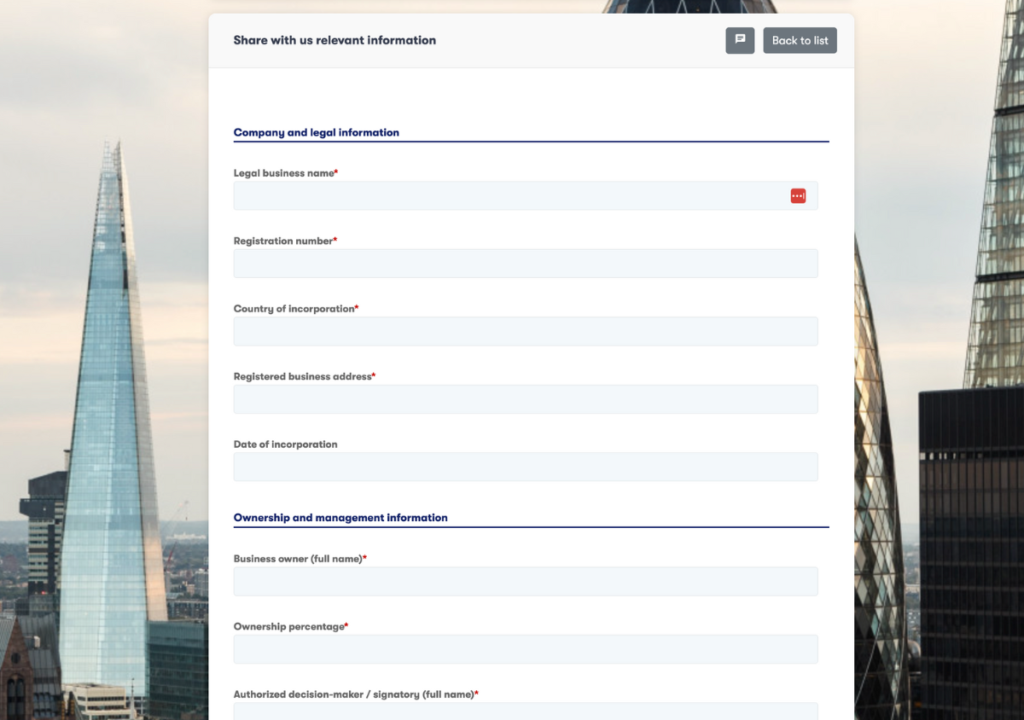
Credit Application Form

This credit application form is designed to help organizations standardize how credit requests are submitted, reviewed, and approved.

*Fully customizable & easy to add to a full credit application process

What this credit application form is typically used for?

A credit application form is used by organizations to get all the information they need to decide on a credit application.

It is the official starting point for the process , where all the standard details get gathered up so the review, approval and all the rest can happen smoothly.

In the real world, people use these forms to get the important bits from applicants before they even start thinking about lending them any money. 

A credit application form, when done right, helps businesses put their internal rules in place, sends the right people to give approval and keeps track of who said yes to that credit, and why. 

What our credit application form includes

This template targets the operational breakdowns that stall most credit decisions. Every section captures the specific data points that underwriters use to move applications forward, eliminating the back-and-forth requests that typically slow approval workflows.

Company and legal information

This step captures the core requirements that determine how credit workflows move forward.

Common requirements include:

• Legal business name

• Registration number

• Country of incorporation

• Registered business address

  • Date of incorporation

These requirements provide the context you need to route applications correctly, apply relevant rules, and connect with your existing systems for the next step.

Ownership and management information

Credit decisions require clear information about who controls the business.

These fields collect essential details:

• The person who owns the business

• How much of the business they own

• Who can make decisions and sign documents

This information helps teams review applications and make approval decisions without asking for more paperwork later.

Financial overview

At application stage, teams require exposure indicators rather than complete financial statements.

Standard fields include:

• Annual revenue range

• Number of employees

• Fiscal year end

These data points segment applications and determine review depth accordingly.

Credit request details

This section specifies the request scope, which includes:

• Type of credit requested

• Requested credit amount

• Intended use of funds

These inputs determine how you’re going to route submissions and facilitate internal prioritization.

Declarations and signature

This is the final section which completes the submission.

In this section, we’ve included:

• Confirmation of accuracy

• Authorization to perform checks

• Electronic signature

These establish accountability and create a reference point for your subsequent decisions.

How this credit application form fits into a client-facing workflow

Our form captures structured data that supports your downstream processes here is how:

-> It uses structured data capture as a foundation

With Clustdoc, your credit application form captures data in a structured, typed format. Each submission becomes a discrete credit case with consistent fields that you can query, reuse, and process automatically.

In other terms, this form will serve as your controlled data entry point.

-> It allows data reuse across your credit application process through Clustdoc

We know that many organizations request the same information multiple times: during review, during approval, and during account setup.

Clustdoc makes all data captured in your credit application form available throughout your workflow.

Form fields remain accessible across your tasks, approvals, exports, and follow-up processes.

This prevents redundant data collection and reduces steps for your applicants and internal teams.

-> It triggers conditional workflows based on custom criterias

Our form template functions as your decision trigger.

Since credit applications require different treatment based on exposure, which varies by amount, company size, and jurisdiction, Clustdoc natively applies conditional logic based on your form data (Requested credit amount, revenue range, country or entity type).

This means that low-exposure cases follow simplified paths, while higher-risk profiles activate additional reviews or approvals.

-> It allows seamless task orchestration across your teams

Credit applications involve multiple roles: credit analysts, finance, management.

Clustdoc orchestrates tasks across these roles for you by assigning tasks automatically based on your workflow logic, sequencing your reviews and approvals and making responsibilities explicit at each stage.

Each teammate or department knows what you expect, when, and on which application.

-> It provides centralized view of all your credit applications

As your volume increases, visibility becomes necessary.

Clustdoc provides you with a centralized view of all your credit cases, their status, and their progression through your workflow. Your teams can monitor pipelines, identify bottlenecks, and maintain oversight without using multiple tools.

How can you use this credit application form with Clustdoc?

This template supports common end-to-end credit scenarios where you need structured intake and controlled decision-making:

• Opening a B2B trade credit account with a supplier

• Requesting a credit line or deferred payment terms

• Submitting an equipment financing or leasing request

• Applying for merchant financing or working capital

• Submitting a corporate credit application

In each case, this form template initiates a full white glove process that spans your credit, finance, risk, and management teams.

Using this credit application form template with Clustdoc

Start with our form, then let your rules, approvals, and teams take over.

If you manage credit requests at scale, this template helps you standardize intake, reduce friction for applicants, and keep full visibility over how and why each decision is made.
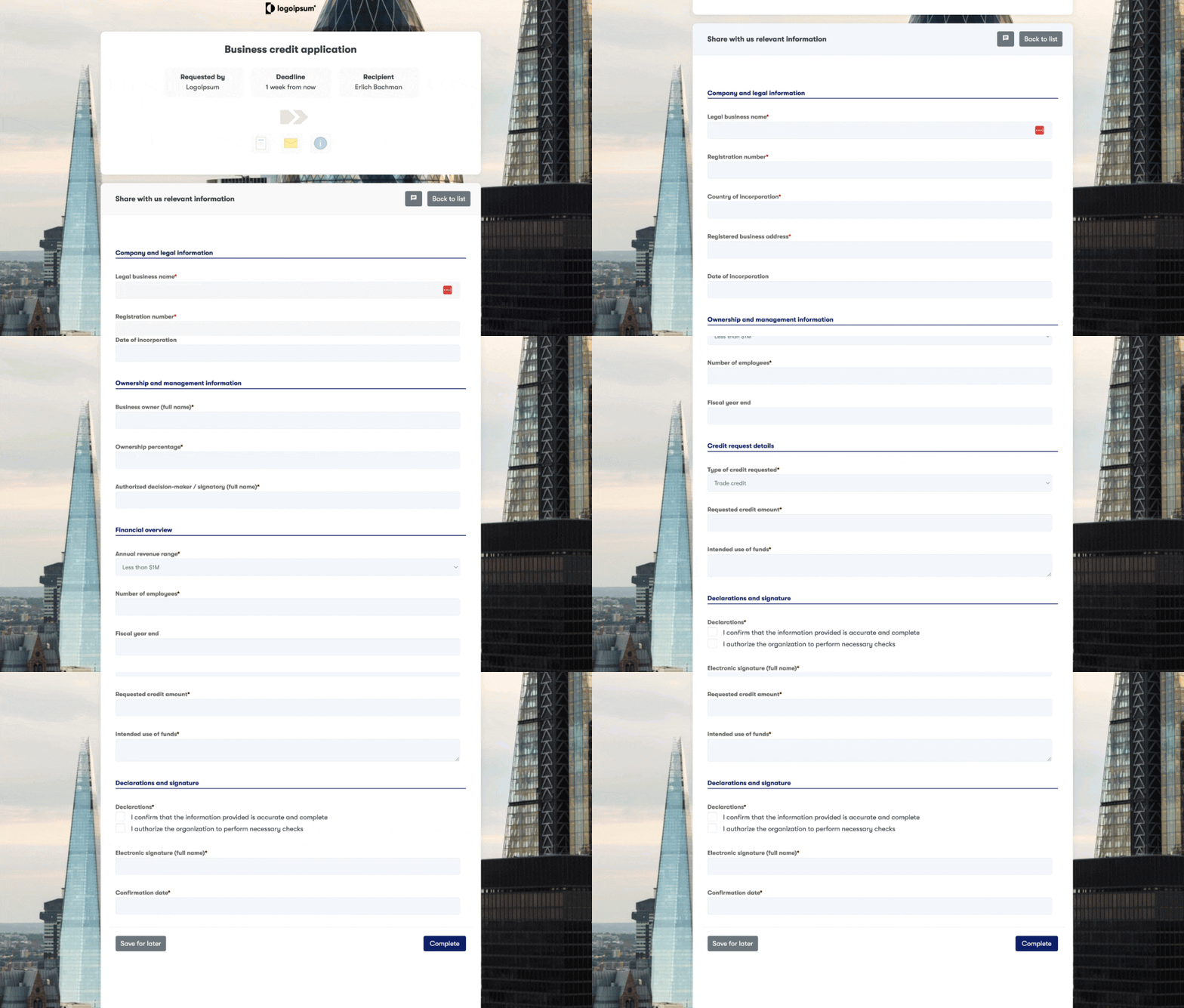
Most credit application forms collect a consistent set of necessary information that allows you to evaluate a request. This typically includes business information (such as the business name and legal structure), contact information, high-level financial information, and details about the requested credit.

Depending on your context, some forms also capture employment information, limited credit history, or references needed for a commercial credit application. The purpose is to gather sufficient detailed information to support your review without overloading the applicant.

If you're handling more than a handful of applications, you've probably noticed that stand-alone forms start creating friction in your workflow.

Stand alone forms create real problems for modern teams day-to-day such as:

• Inconsistent data handling
You capture information once, then you're manually copying it across reviews, approvals, and account setup. Which means you're dealing with errors, missing fields, and version mismatches that shouldn't exist in the first place.

• Limited visibility after submission
Once someone submits the form, you lose track of where things stand. You can't easily see who's reviewing what application, or what's actually holding up a decision.

• Manual routing and follow-ups
Your credit team has to decide manually who needs to review each application. You're sending follow-up emails by hand and trying to keep track of responses across different tools.

• Poor auditability and traceability
When you need to understand who approved what and when, you're digging through email threads and scattered files instead of checking one reliable source.

• Scaling issues
What works fine when you're handling a few applications breaks down as your volume grows. 

Usually stand-alone forms collect the data, but they do not handle what properly what happens after.

Yes. A single business credit application form can support multiple workflows inside your Clustdoc account. 


Losing time chasing missing customer information?

Try Clustdoc today, launch your new workflow  tomorrow.