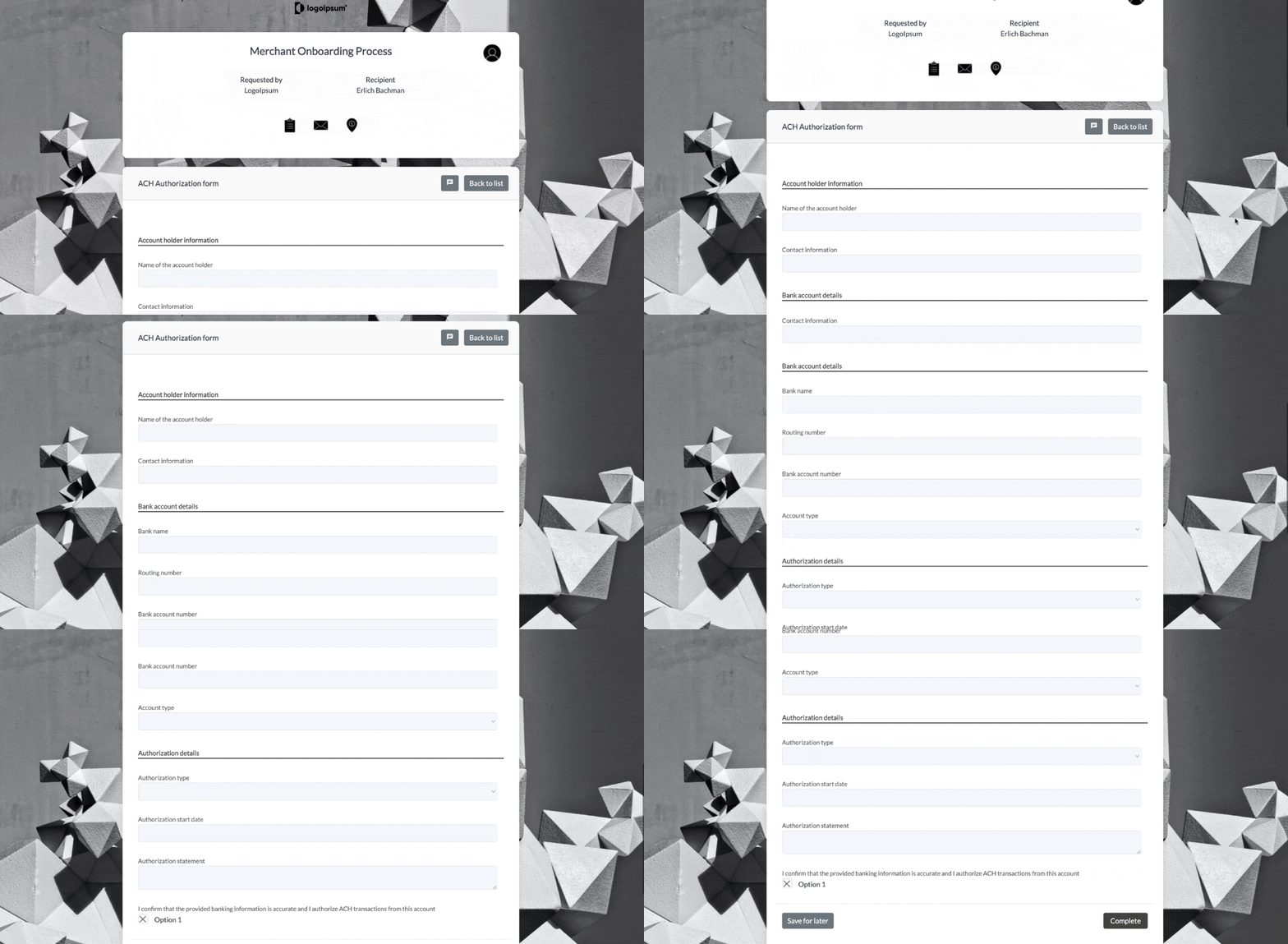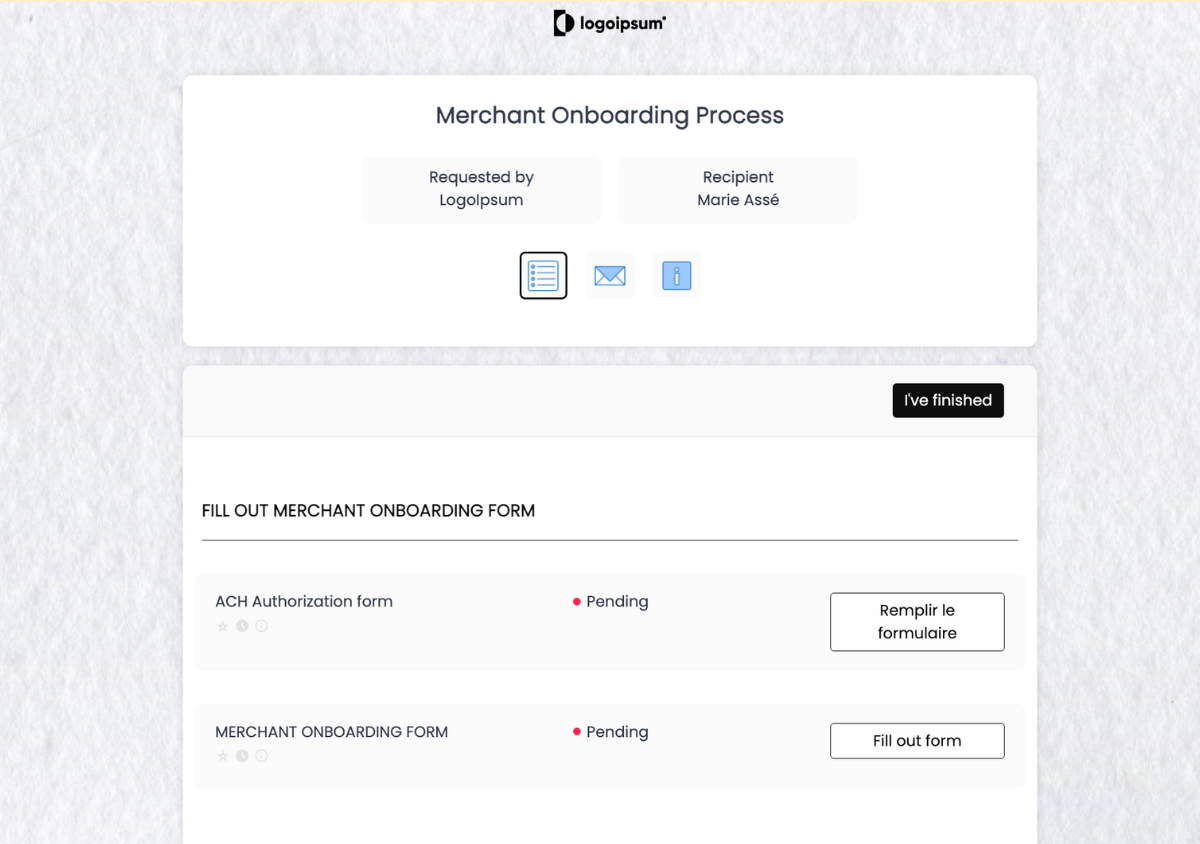
ACH Authorization form

A ready-to-use ACH authorization form to collect bank account details and customer consent for ACH payments, including recurring payment setups and one-time payments.

*Fully customizable & easy to add to a real client checklist
What is an ACH authorization form and when do you need it?

An ACH authorization form is used to obtain permission from an individual or business account holder to initiate ACH payments through the Automated Clearing House network.

This type of ACH authorization is commonly required to process ACH debit transactions from a U.S. bank account, whether for recurring payment arrangements or single-use authorization. The form serves as a legal form that documents the customer’s authorization statement and acts as a record of the agreed-upon transaction.

Teams typically rely on an ACH payment authorization form when they need to formalize electronic payment requirements, collect provided banking information, and ensure transactions remain compliant over time.

What’s included in our ACH authorization form template

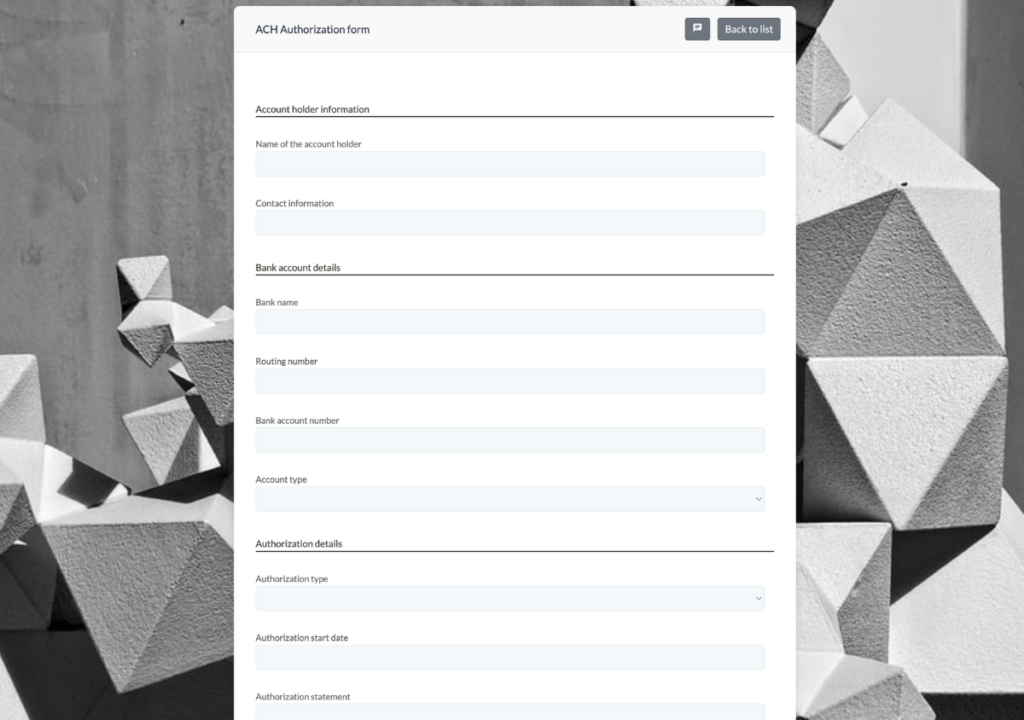
This Clustdoc ACH form template is designed to capture all required information in a clear, structured way.

It includes a list of the key information needed to process ACH transactions properly, such as: 

• the name of the account holder,

• contact information,

• bank name,

• routing details,

• bank account number,

• and account type (checking or savings account).

Our template also covers authorization details, including whether the authorization applies to recurring transactions or one-time payments, the amount of the recurring transactions when applicable, and the authorization date.

Our digital authorization form template helps ensure the required information is properly formatted and can be reused after you capture it once.

What you can do with our digital Clustdoc authorization form

Using Clustdoc, this ACH authorization form was designed to operate as part of a real client workflow.

Once submitted by your customers through a branded customer portal, it can feed into a complete client workflow.

-> Reuse this data in downstream steps

Data collected through the form can be reused for document automation and contract automation.

For example, information entered by the account holder can be injected into a payment authorization document or related agreement, generated as a PDF, and sent to the customer for signature inside the same portal.

-> Verify the identify of the submitter

While you collect banking details through this authorization form, you can also prompt your customer to complete an identity verification step as part of the same workflow.

-> Trigger approvals from the right departments

Based on certain fields or answers captured through this authorization form, you can also notify the people.

These may include notifying internal teams when a new authorization is received, alerting a customer if required business information is missing, or confirming that ACH payments are ready to be processed.

-> Implement Scoring rules based on form answers

Banking details can be reviewed internally, checked against predefined rules, or used to apply simple scoring logic before activating ACH debit transactions.

If your teams are processing payments from a business account or handling higher-risk payment scenarios, this can bring tremendous value to your operations.

-> Send the data to your systems

Collected data can also be injected into other systems, such as billing tools, accounting platforms, or payment processors, ensuring consistency across accounting firm payment processes and related financial systems.

-> Comment and request edits on submission

This authorization form allows you to review each submission and provide feedback directly within the workflow.

If information is missing, unclear, or needs to be corrected, you can leave comments on the submission and request edits from the customer without restarting the process. The customer is notified and can update the required fields or provide additional details through the same portal.

-> Allow customers to save and complete the form later

You can allow customers to save their progress and return to the authorization form later, without losing the information they’ve already entered.

This is especially useful when completing the form requires gathering banking details, reviewing account information, or coordinating with another internal contact. Instead of forcing everything to be completed in one session, you give customers the flexibility to move at their own pace.

Saved drafts remain linked to the same workflow, so when the customer resumes, they continue exactly where they left off.

Use this authorization form in your client-facing processes using Clustdoc

With Clustdoc, this authorization form can be used as part of a broader payment workflow. When created inside your Clustdoc account, it becomes a reliable entry point for managing ACH payments, related financial transactions, and compliant authorization processes.


Yes. The ACH authorization form template can be fully customized to match your payment and compliance requirements. You can adjust fields, add conditional logic, and adapt the authorization scope based on how ACH payments are processed in your organization. This allows the form to reflect your internal rules without changing the underlying workflow.

Customer consent is captured directly through the authorization form and stored as part of the client workflow. Each submission is recorded with the provided banking information, authorization statement, and acknowledgment, creating a traceable record that can be referenced later for payment setup, audits, or internal reviews.

Yes. The authorization form can be combined with follow-up steps that request supporting documents when needed. Based on the information submitted, customers can be asked to upload additional documentation, such as bank statements or verification files, within the same workflow and client portal.

Spending too much time following up on incomplete forms?

Try Clustdoc today, launch your new workflow  tomorrow.