Client onboarding always involves a moment of judgment.
Before contracts are signed, access is granted or services are deployed, you will need absolute confidence that your contact company is legit.
And we all know that in practice, that’s not always obvious.
Nowadays, even fraudulent companies present strong branding, a professional website, and even sometimes carefully curated customer feedback.
In most cases, everything seems to align, on the surface.
That’s why knowing how to check if the business you work with is legit has become one of the cornerstones of successful onboarding programs.
On top of reviewing documents, your teams will also need to assess the company’s legitimacy, its operational reality, and the risks attached to it.
In this guide, I’ll walk through 6 essential controls you’ll need to perform to check if a business is legit during customer onboarding.
We’ll also see how these controls connect to a broader Know Your Business (KYB) structure for stronger business verification using cutting edge technology.
Too many tools. No clear progress.
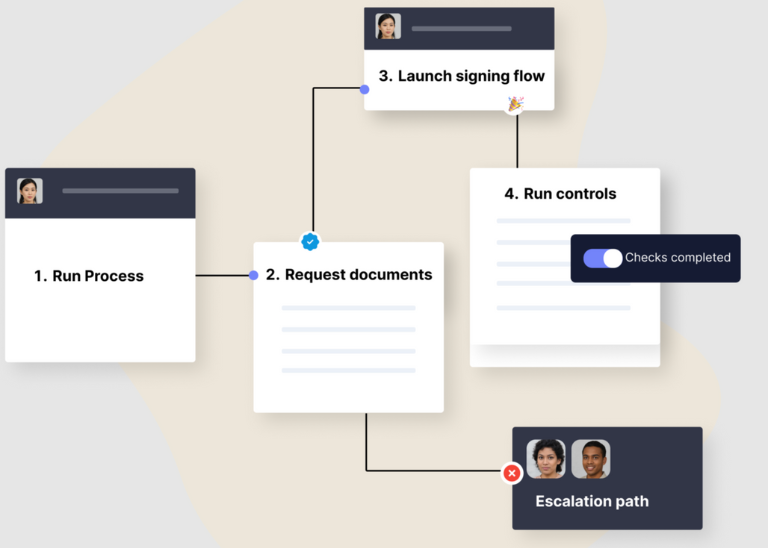
Before we dive into the mechanics, let’s quickly talk about why determining whether a company is a legitimate business has become so critical.
A structured business legitimacy check helps you assess a company’s authenticity, risk profile, and overall financial health before customer onboarding begins.
In reality, this process supports informed decisions and protects your business from pitfalls that are becoming more common every day.
For example, let’s say you skipped running proper checks on a new supplier who shows up with all the right paperwork but turns out to be using a brand-new company registration with details that don’t quite add up and just a virtual office address.
You could end up working with what’s basically a front company for money laundering, which means serious financial hits and damage to your reputation.
Whether you work with small local businesses or large corporate vendors, it is essential to maintain regulatory compliance and reduce exposure to fraud.
And this also applies whenever you extend credit, grant system access, or form partnerships.
Without proper due diligence, your organization faces several distinct risks that can compound quickly.
To effectively mitigate these risks, it’s crucial to follow a clear, step-by-step verification process that uncovers any red flags before you commit to a business relationship.
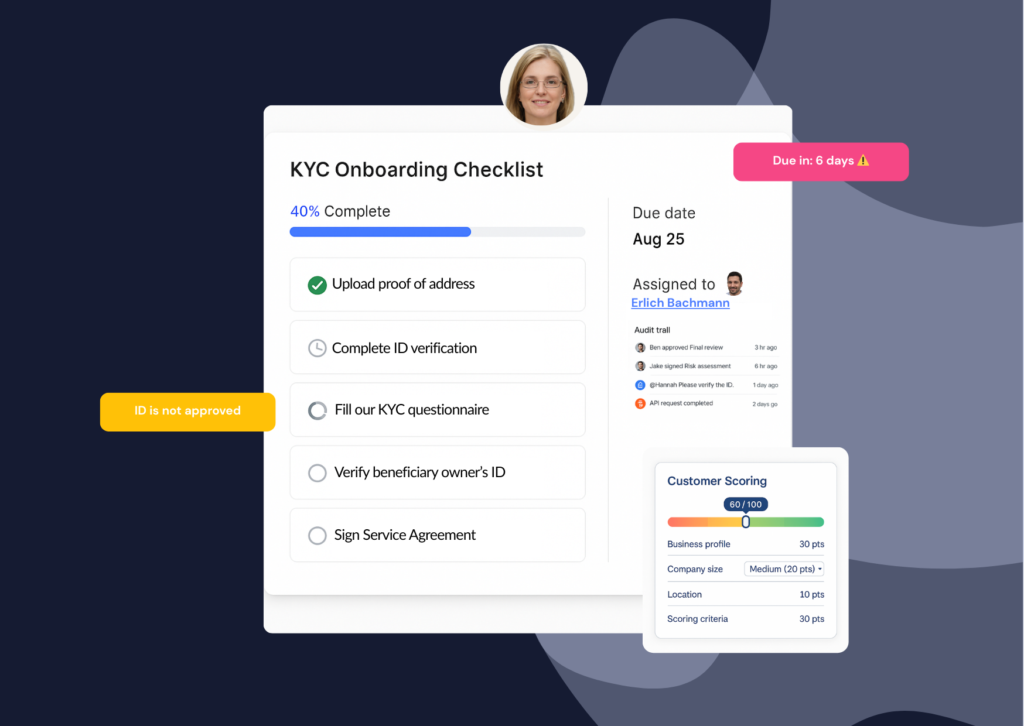
Before you run any verification checks, you need the foundational layer in place.
Structured data collection isn’t something you bolt on afterwards, it’s actually the prerequisite that makes everything else work.
This is where a customer onboarding and engagement platform like Clustdoc can help.
Clustdoc operates as the infrastructure layer that orchestrates the entire intake phase, letting you define what information you need, when you need it, and how it flows into your verification process.
Through dynamic intake workflows, you standardize which data points matter for your risk profile, adapt requirements by jurisdiction or industry, capture ownership structures and authorization chains with voting rights, and ensure every submission follows the same integrity standard.
On a client onboarding platform, orchestration capabilities are what transform scattered document requests into coherent company intelligence.
Without this infrastructure in place, your verification checks may fall flat: your teams will try to make sense of fragmented data every time they need to engage with new customers.
Establishing a solid data foundation is essential before moving on to verifying the business registration details, which is the first critical step in confirming a company’s legitimacy.
Once you’ve got the right client onboarding system in place, and data starts coming in in structured way, your first and most important move is to check business registration records to confirm that you’re dealing with legitimate businesses.
This is where things often start to unravel for fraudulent entities.
To get this right, confirm the company’s registration by reviewing official government databases.
| Country | Official Registry | Governing Authority | Key identifiers |
|---|---|---|---|
| United States | Secretary of State Business Registry (state-level) | Individual State Governments | Entity Name, State File Number |
| United Kingdom | Companies House | UK Government | Company Number |
| Canada | Corporations Canada (Federal) + Provincial Registries | ISED Canada + Provincial Authorities | Corporation Number |
| Australia | Australian Securities and Investments Commission (ASIC) | ASIC | ACN (Australian Company Number) |
| France | Registre du Commerce et des Sociétés (RCS) via INPI | Institut National de la Propriété Industrielle | SIREN / SIRET |
| Singapore | Accounting and Corporate Regulatory Authority (ACRA) | UEN (Unique Entity Number) | UEN (Unique Entity Number) |
From there, verify:
• The registration number or company number
• The company’s active status
• The formation date
• Whether the business is legally registered
Beyond that, always cross-reference registration data across multiple sources to ensure the business operates under the declared business name.
This step alone can reveal inconsistencies that signal deeper problems.
Next, if possible, confirm:
• Employer Identification Number (EIN) or equivalent tax identifier
• Registration number consistency across documents
• Valid license where required
A mismatch in registration details is one of the most common types of red flags indicating a potentially fake company. Using Clustdoc client onboarding orchestration platform, you can automate the collection and validation of these registration documents, ensuring accuracy and speeding up your onboarding process.

Now that we’ve covered registration data, let’s examine how physical presence can also reveal inconsistencies.
A legitimate company should have a verifiable physical address, but this is where many verification efforts break down.
To check if a company exists beyond paper documentation, you can:
• Search the company’s address on Google
• Confirm the physical address isn’t linked to multiple suspicious entities
• Identify whether the address is a real office or a virtual space
• Be cautious with PO boxes used as primary business addresses
In practice, inconsistent or suspicious address information often serves as an early warning sign.
A trustworthy business typically maintains consistent location data across all touchpoints, and discrepancies here tend to indicate broader organizational issues.
This step becomes especially important when dealing with local businesses or companies with multiple operational sites.
That said, you shouldn’t assume that multiple addresses automatically signal fraud since legitimate companies often operate from several locations.
Clustdoc’s verification workflows can be configured to flag suspicious patterns, helping your team focus on higher-risk cases.
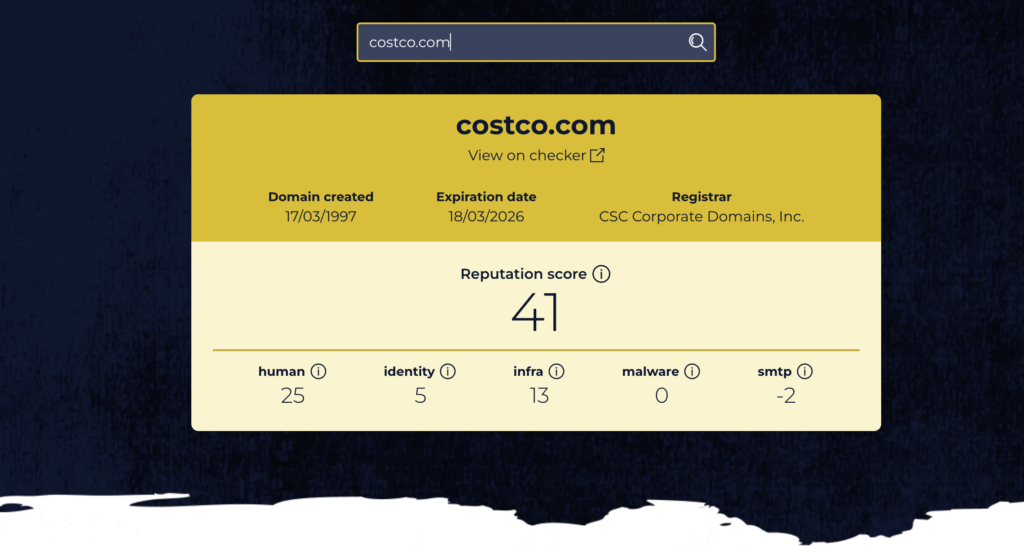
At first glance, a professional website might seem to guarantee legitimacy. In reality, this is one area where fraudulent companies have significantly improved their game.
While researching this, you’ll need to examine:
• Domain history (recently created domains may signal risk)
• Suspicious language or exaggerated business claims
• Inconsistent contact details
• Generic business email addresses
• Lack of regulatory compliance disclosures
From there, evaluate:
• Social media presence
• Online reviews
• Customer complaints
• Whether the company responds to customer feedback
While online reviews alone cannot confirm legitimacy, repeated complaints combined with other warning signs often indicate elevated risk that warrants deeper investigation.
At this stage, you’re looking for patterns rather than isolated incidents.
Clustdoc integrates with third-party data sources and can help centralize this information to give a clearer picture of the company’s online reputation.
In the United States and certain markets, the Better Business Bureau (BBB) provides valuable insights that many teams underutilize.
Use the BBB website to:
• Review BBB ratings
• Identify customer complaints
• Confirm how disputes were handled
The business bureau record helps assess whether the company has a pattern of unresolved issues or consistently poor customer service.
But once again, this data point works best when combined with other verification steps.
It’s worth noting that absence from the BBB doesn’t automatically confirm a company is legit or fraudulent.
Just write this down as part of your due diligence.
For EU companies, there isn’t one single equivalent to the Better Business Bureau, but you can still leverage official national registers and public databases.
These sources confirm whether the company is legally registered, active, and properly declared. They also provide visibility into the company’s corporate structure, and in some cases financial statements.
Clustdoc’s platform can automate the retrieval and storage of these records, ensuring you have a reliable audit trail for compliance purposes.
Once you’re done with surface-level checks, you can move on to a deeper business legitimacy check including:
Financial statements where available.
If you do not have this information upfront, tools like Clustdoc document collection can be a great way to capture these files.
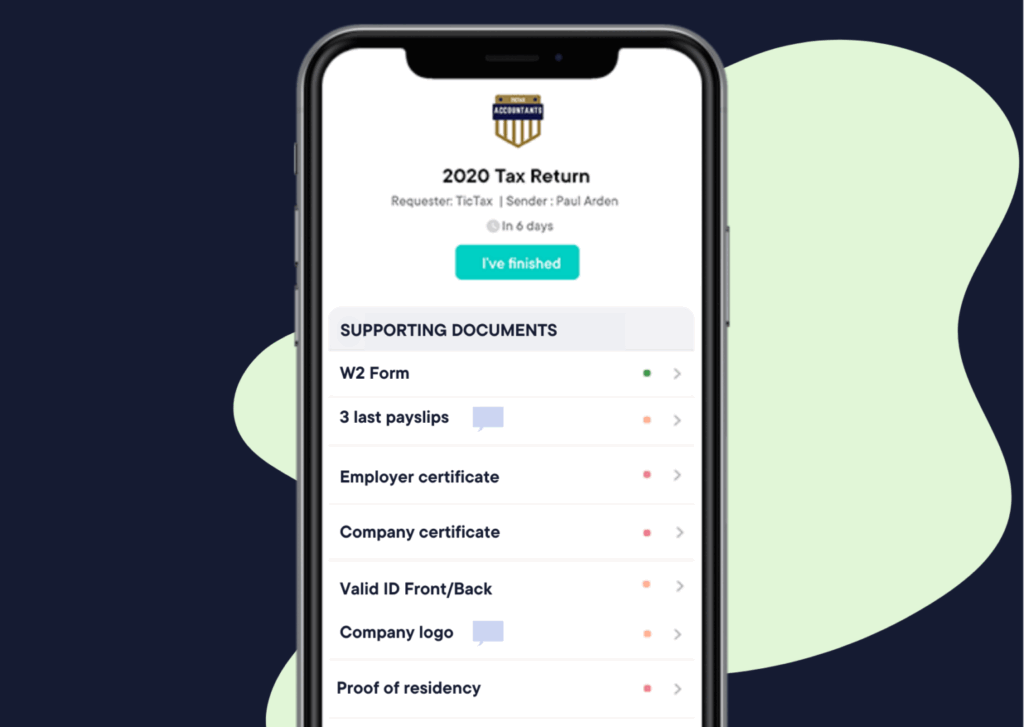
Your goal here is to assess financial health, litigation history, and spot any public sanctions or enforcement actions.
For high-risk entities, you’ll want to confirm the ultimate beneficial owner and perform ownership verification as well.
Keep in mind that hidden ownership structures can signal money laundering exposure that creates compliance risks for your organization down the line.
Clustdoc supports secure collection and verification of ownership documents, helping you meet stringent KYB requirements efficiently.
Now, to confirm the business operates as described, you can take several practical steps that reveal operational authenticity:
• Cross-check contact details across website, registration data, and official filings
• Confirm services align with the declared business registration
• Verify that the registration status is current
• Ensure the registration number matches submitted documents
If you can’t establish the company’s authenticity through consistent documentation, this is typically when you should reassess the risk level.
At this point, any inconsistency would often indicate deeper organizational problems.
Clustdoc’s dynamic workflows enable you to set conditional logic that escalates suspicious cases for manual review, ensuring no detail is overlooked.
Understanding the most common types of fraudulent companies helps tailor your verification approach. Here’s what you’re likely to encounter:
Business impersonation: Fraudsters create fakeidentities mimicking well-known companies to scam customers or investors. These operations often have professional websites but lack proper registration documentation.
Entities with no real operations used to hide illicit activities. These typically have valid registration but minimal operational footprint.
Fake companies created with synthetic IDs. These represent sophisticated fraud that requires deeper investigation to uncover.
Falsifying key business information like financials. This is where financial statement analysis becomes crucial.
Clustdoc’s customer onboarding and engagement platform includes advanced compliance capabilities designed to automate and centralize the entire onboarding lifecycle.
It enables businesses to conduct thorough verification and compliance checks as part of a structured, digital onboarding process.
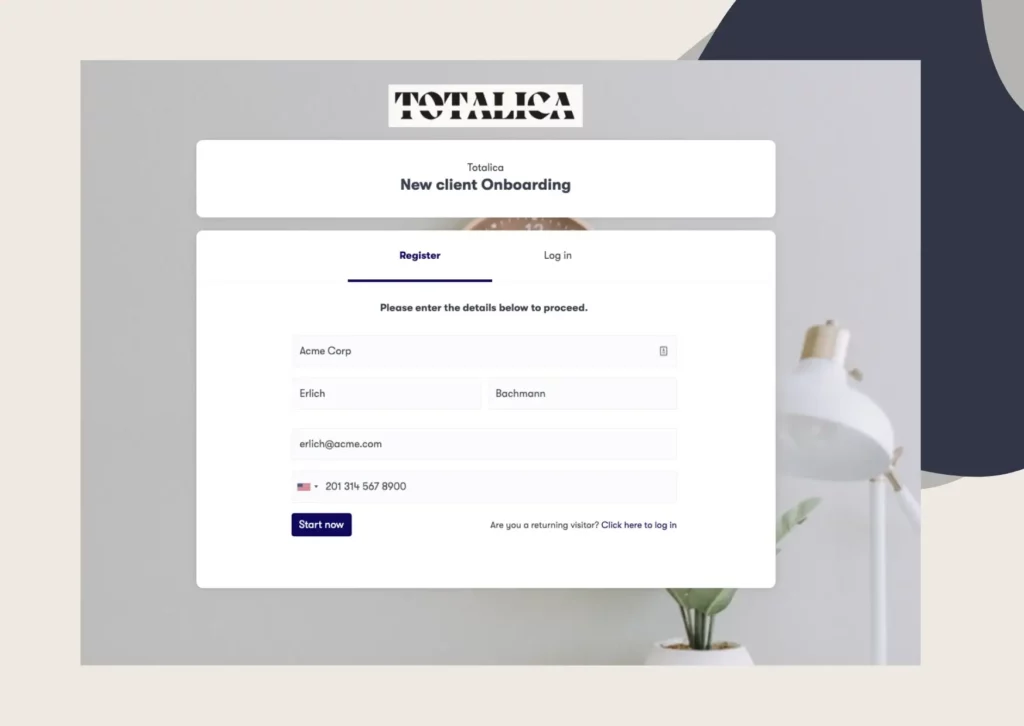
By combining a client-facing onboarding portal with client management capabilities and compliance checks, Clustdoc ensures that every company you onboard is properly assessed before approval.
This way, you can reduce manual handling, shorten review cycles, and strengthen your KYC and KYB processes by deploying consistent, traceable customer records.
Whether you are onboarding SMEs or large enterprises, Clustdoc provides a centralized verification framework that supports regulatory compliance and enables your team to make faster, well-informed decisions with confidence.
Before running any external verification checks, you need a structured intake infrastructure in place. That means using a client onboarding platform like Clustdoc to standardize what data you collect, define mandatory documents, and centralize all submissions into a traceable company file. Without this foundation, even the best verification tools are working with incomplete information.
The six core steps are: verifying business registration through official registries, confirming physical presence, analyzing the company's digital footprint, checking reputation and bureau records, reviewing financial and legal standing, and validating operational consistency. Each step builds on the previous one, which is why structured data collection before you start matters so much.
You need to capture declared shareholders, identify ultimate beneficial owners, and flag cases where ownership structures are opaque or layered.
The main types are business impersonation (fake entities mimicking legitimate companies), shell companies with no real operations, synthetic businesses built on fabricated identities, and business misrepresentation through falsified financials. Each requires a different verification angle, which is why a multi-step KYB process is more effective than any single check.
Still stitching emails, files, and approvals together?
Clustdoc gives teams one place to run client-facing work, boost customer engagement and increase compliance.

Claire writes about customer onboarding, digital processes, and the day-to-day challenges faced by operations teams. At Clustdoc, she focuses on practical insights: how organizations collect information, guide customers through complex steps, and improve service delivery with automation.

Sampada is a content marketer at Clustdoc, writing about marketing, business, and technology that helps teams work more efficiently.